As we prepare to wrap up our season, we wanted to offer a chance for those of you unable to purchase merchandise in person this season a chance to purchase online!
Online PCB Turtle Watch merchandise sales are now available through Sunday October 13, 2024 (or when supplies/sizes are depleted)!
Many of you have asked how you can purchase one of our Turtle Watch t-shirts, hats/visors or reusable bags online and have it shipped. Well now is your chance!
For a limited time between now and Sunday October 13, 2024 you can place your order and we will fulfill those orders first come, first serve.
Our education outreach team partnered with Gulf World Marine Institute to host an outreach session for Girl Scout Troop 103 from Tallahassee. They were visiting PCB to learn about sea turtles and they all have a strong affinity for marine life (they have toured other marine life facilities). During this visit, they earned their Water Badge after seeing our educational specimens, hearing about our program and sea turtle species common to this area. They also observed the GWMI rehabilitation activities for sea turtles including treatments being performed on a loggerhead patient. We are inspired by the passion this group of ladies had for marine life and who knows, maybe they will one day be professionals in the field or volunteers themselves!
Girl Scout Troop 103 along with the Turtle Watch and GWMI volunteersLearning about our program and sea turtle speciesTaking a close look at our educational specimens
PCB Turtle Watch has now completed their remake of the Disney movie “Holes”. We had 8 nests that suffered from washover and/or accretion from Tropical Storm Alberto mid June that stopped the development of the eggs. None of these nests showed signs of having hatched so as each one reached day 80 from being laid they were excavated to locate and count the number of eggs. These excavations were not announced to the public and our lead excavator enticed volunteers to attend under the guise of a free boot camp, focused on an upper body workout. Some of these nests had over 3 feet of accretion that had to be moved just to reach the original beach level to then dig another 2 foot looking for the eggs. After many hours of moving many cubic yards of sand, digging out completely buried nest stakes and caution/survey tape and filling the holes back in, we have now excavated all of these failed nests. We appreciate the hours and physical effort put forth by every one of our volunteers that helped us during these excavations. We always appreciate our volunteers but to willingly sign up night after night for these excavations receives an extra special Thank You!
Excavation of these 8 nests revealed 506 unhatched eggs that showed little to no development. Sea turtles can nest 3-7 times in a season so while these nests weren’t successful, we’d like to think other nests laid by these females have or will have much better results this season. Stay up to date on total number of nests hatched and hatchings that have emerged here on our website, we are at over 1600 hatchlings so far this season!
Our volunteers have stayed busy the last week with nests hatching every few days, around incubation day 55. Many hatchlings have been disoriented requiring they be recovered and released on a darker part of our beach. After a nest hatches, an excavation is scheduled to assess the nest contents with the excavation and results being announced on Facebook.
This week we will reach the day 80 mark for several nests that were impacted by Tropical Storm Alberto. Three of these nests suffered a good deal of wash over due to high surf and 2-3 foot of additional sand being placed on the nest. Others had washout or washover that likely stopped the development of the eggs. Volunteers will schedule private excavations of these nests to try to locate the eggs to at least determine how many had been laid. These nests are numbered in the teens, so we hope that those females returned weeks later here in the Panhandle to lay some other nests that are having better hatch success.
We appreciate all of the hours our volunteers are spending now on hatching monitoring, recovery and excavations!
Volunteers searching for eggs of a nest that experienced some washout during Tropical Storm Alberto in June
We are well into our hatching season with nest 23 having recently hatched!
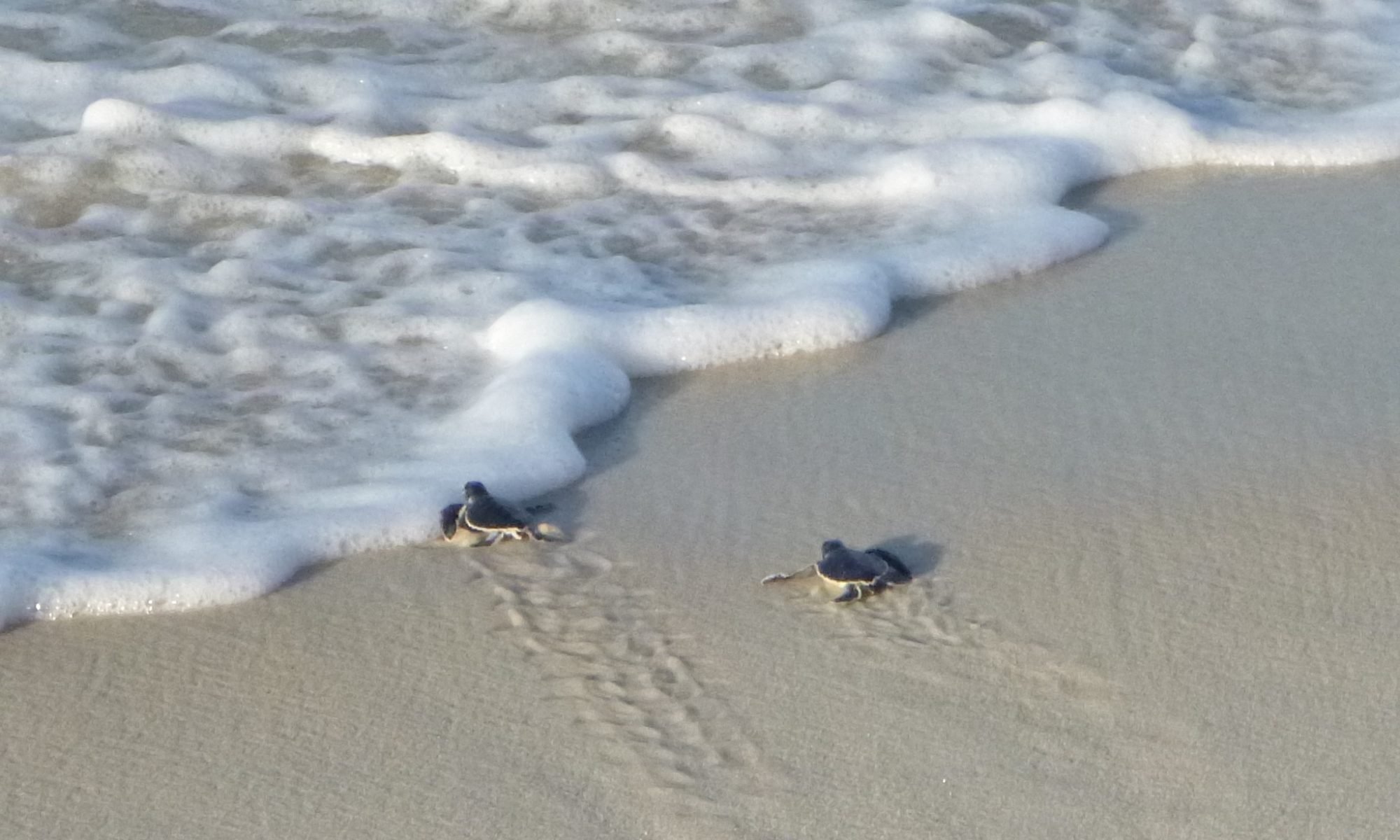
We continue checking the beach in the mornings for new nests but have not had any recently and remain at 34 nests having been marked for protection this season. On the flip side we are having nests hatch every couple of days at this point, commonly occurring overnight. Our volunteers have been trained by FWC on rescue and recovery of disoriented hatchlings. We have had a couple of nests where the hatchlings made it to the water unassisted but we have had many more nests hatch where the hatchlings have been disoriented and rescued and released that same evening by volunteers. Our volunteers then excavate the nest 3-4 days after a hatch to determine the hatch success based on the nest contents which will then be reported to FWC. We announce public excavations via our Facebook page Events section and we stream on Panama City Beach Turtle Watch Facebook or post videos/photos as a way to keep everyone updated on the results so stay tuned there for those details. We do have several nests that experienced washover and sand accretion that may have slowed or stopped development of the eggs. We will conduct private excavations of those when the time comes. In the meantime we’ll stay busy with the remaining non-washed over nests!
Everyone can do their part in by leaving the beaches clean, dark and flat. Every little bit can help and make a difference for this protected species.
Visible depression following a recent hatchExcavation where contents are extracted from the nest, categorized, data recorded and anything other than research samples or live hatchlings are returned to the sand to become beach nourishmentLive hatchlings found during an excavation. Even after 3 additional days following the main hatch they hadn’t successfully emerged and needed our help. They were released that night on a dark local beach.
Weekend survey mornings just won’t be the same…for two seasons Gabriel Walsingham, a GCSC student, has conducted weekend morning ATV surveys for our PCB TW program. He showed up before sunrise ready to work, found crawls, recorded the required data and coordinated with volunteers to mark nests. He also checked on the nests daily and recorded data for hatched nests. Gabriel became familiar with and protected our local shore birds and other wildlife species along the way. We wish Gabriel the best as he continues his studies as a new University of Central Florida student!
We were honored to participate in the Science and Discovery Center’s Pirates and Mermaids camp this past week. Our volunteers shared information about our program and then allowed the campers to see some of the specimens up close. Young minds are like sponges and the campers were attentive and had the opportunity to learn about Sea Turtles and ways we can all help protect them.
In anticipation of high surf/surge this week we’d like to share some info that may be useful while you are visiting our beaches.
As per this year’s FWC permit guidelines, we leave nests in place when they are found and mark them for protection in their original location. That may put the nest at risk of wash-over or wash-out the two plus months it is incubating on the beach. If you see any exposed eggs (they look like ping pong balls) leave them where they are and contact us here on Facebook or via non-emergency PCB Police at 850-233-5000 and we’ll have our volunteers respond. Each nest is marked with a green tag that has the nest number, we’ll need that info and/or your location.
Our surveyors check the nests at least 4 times a day but having extra sets of eyes on our nests never hurts, so thank you for reporting any eggs you may see. But please, never replace any of the stakes or dig for the eggs, our volunteers will assess the situation and take care of it.
Sea turtles lay nests approximately every 2 weeks during the season. So while a couple of nests may be impacted, we’ll hope that the others are very successful!
Photo: Nest from a previous season that eroded and had exposed eggs
Our volunteers are busy and they are loving it! We continue to find new sea turtle nests and expect to do so for the next few weeks. At the same time, with nests having been on the beach for 2+ months now we are experiencing hatches.
Nesting and hatching typically happen overnight. Please refrain from using any light around a sea turtle. White light and flash photos can be temporarily blinding to them leading to disturbance and disorientation. While you are on the beach, FWC recommends the use of red LED flashlights, give them a try you’ll find your eyes adjust a lot better as well with the red LED flashlight. Also turn off your exterior lights and leave your curtains/blinds closed to reduce interior lights from causing any disorientation.
If you do encounter a nesting turtle please call PCB Police non-emergency at 850-233-5000. If you encounter any hatchlings, you can call them or call the number on the blue sign posted at the nest. Either contact method will reach our volunteers so they can respond. Then stand away from the turtle(s) and give them space.
We don’t post nest locations or when a nest might hatch and quite frankly we don’t know for sure, it’s nature. Our volunteers even miss the hatch a lot of the time because it can happen anytime and can be quick once it starts.
What we will post is any excavations that we can invite the public to attend. Stay tuned to the Events section of our Facebook page for those announcements. If you can’t join us in person, check our page around that time and we’ll try to stream live on Facebook with the video available for replay later.
just in case our surveyors or volunteers needed some extra help finding our latest nest, they could follow the rainbow (photo care of our volunteer team that marked nest 33 today)
Now that our 2024 hatching has started we would like to recognize two of our volunteers heavily involved in our hatching activities.
At the beginning of this season Nancy Evou and Betsy Straley were both recognized by Panama City Beach Turtle Watch with Lifetime Achievement awards recognizing their long running contributions to our program. To relate their years of service to sea turtles, the hatchlings that they helped in their first year could very well be returning to our beaches now or in a few years to lay their own nests!
Our program has been in place since 1991 and let’s just say these two volunteers have done it all! They have contributed countless hours each year and we hope they are able to continue for many more!
In her recent volunteer years, Betsy is out on the beach at night as part of the hatching monitoring team. She also helps with our education outreach initiatives and strandings (sick, injured or deceased sea turtles).
Nancy is involved in just about every aspect of PCB TW. Her volunteer efforts are most often seen through the education outreach, strandings and very much so all of the nest excavations!
We are very appreciative of all of the efforts and hours that Nancy and Betsy give to our program and look forward to having them on our team for many years ahead!
Photo: Nancy Evou (L) and Betsy Straley (R) with their custom Lifetime Achievement awards with photos taken throughout the years, with congratulations messages from some of our current and recent volunteers.