Our 2025 Season Recap

Happy New Year everyone!

As we turn our calendars to 2026, we wanted to share a recap our 2025 Season.

We’d like to thank all of our surveyors, volunteers, local agencies, residents and visitors who played a role in the protection of the Loggerhead and Green sea turtles in Panama City Beach, FL during our 2025 season.

We had 49 nests, 42 loggerhead and 7 green, on the beach this season stretching from our eastern to western boundaries. We relocated two nests. Volunteers witnessed nesting turtles and were able to apply passive tags on four nesting loggerheads and two nesting greens. We recorded two different in season repeat nesting turtles. We endured minor nest impacts from high tide events (fortunately no named storms) leading to the highest hatchling production on record since 1991! We also experienced a late end to our season with a special boat release of cold stunned hatchlings from two nests.

We appreciate the help from our local police, code enforcement and our local lifeguards. We enjoyed the opportunity to share information about our program and sea turtles at local events, schools and excavations.

Below we have recapped some of our 2025 season highlights. We look forward to being ready to start our season again May 1, 2026!

All work/photos conducted under MTP-038, MTP-271, MTP-286

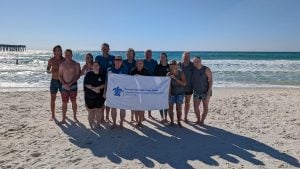
On New Years Day, some of our PCB Turtle Watch and Florida Panhandle Marine Institute volunteers conducted their annual Polar Plunge welcoming 2026! We all look forward to a great year ahead and are happy to have you follow along!
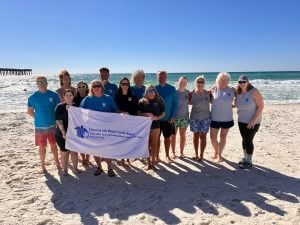
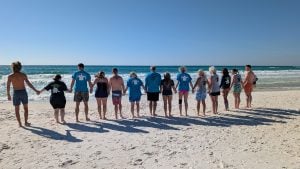
Ready for the plunge (on a sunny 65 degree afternoon with water temps in the low 60s)
And they are off for the plunge!
All smiles welcoming the new year!

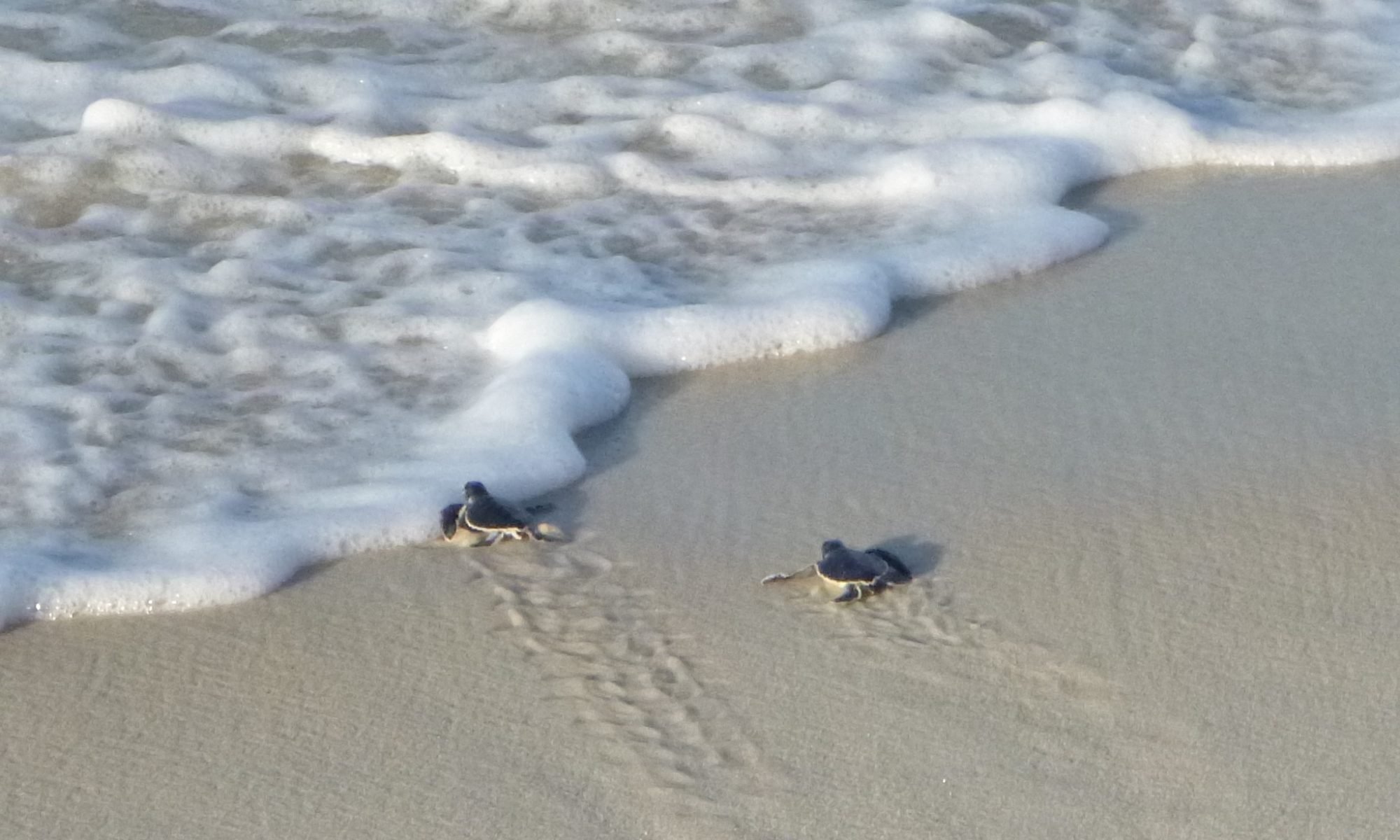
An offshore release of green hatchlings

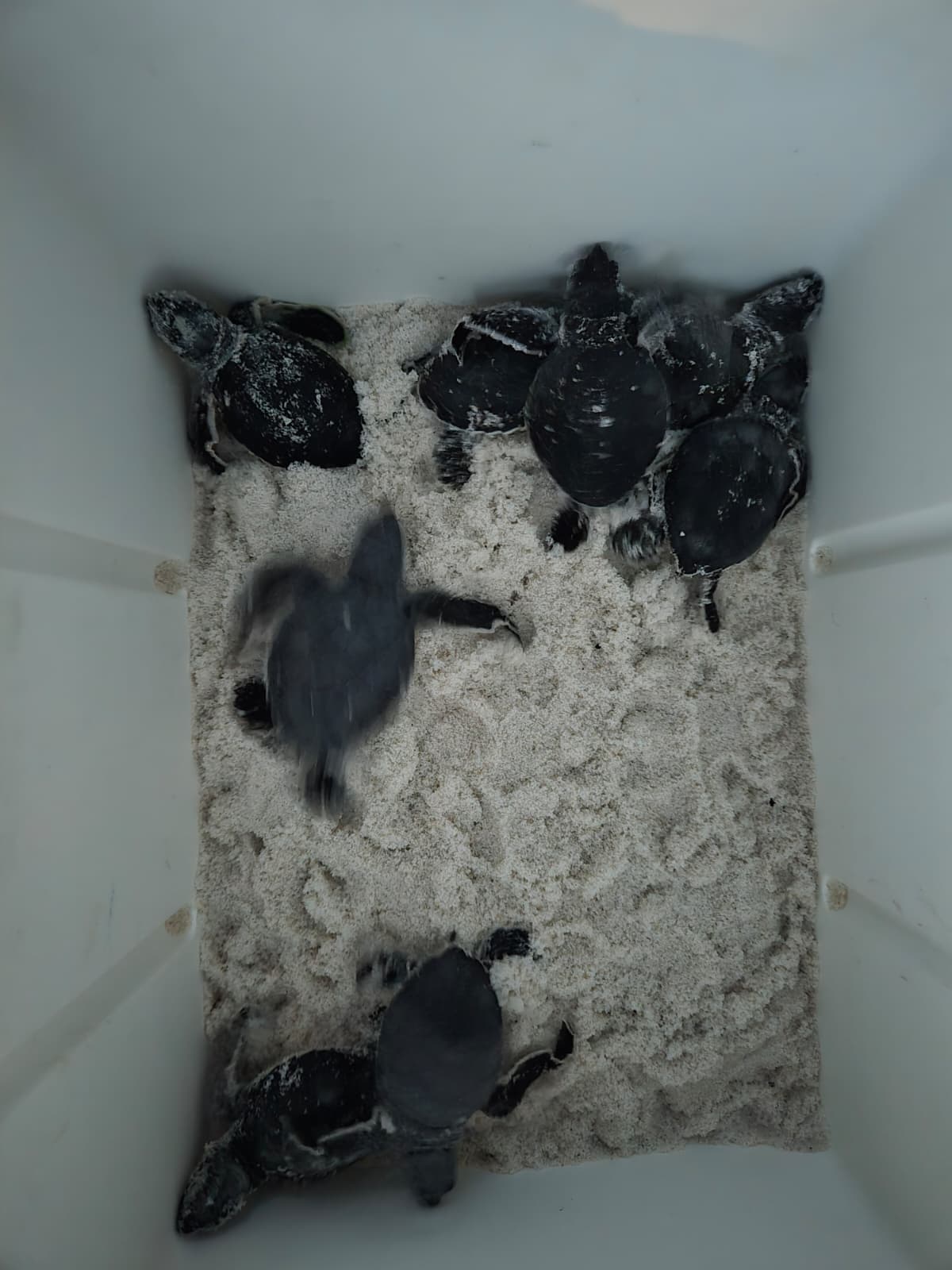
Brrr….earlier this week nest 47 green hatchlings emerged prior to sunrise and found the mid 40’s air temperatures to be a little too cool.  After they emerged from the chamber and started making their way to the water they became cold stunned leaving them motionless on the beach.  Our morning surveyor found them during her daily nest check, collected them and coordinated with Gulf World Marine Institute as our local FWC facility. They slowly warmed them up, they became active and ready for release.

These hatchlings received a special release care of St. Andrews bay private charters and tours. The hatchlings were escorted offshore a couple miles and released into the Gulf to begin their journey.  The nest was excavated 3 days later (luckily the air temps had gotten a little warmer) to find that the nest produced 128 green hatchlings of which eight were still in the nest during excavation. They were collected and released that evening into the Gulf.

We have two nests remaining on the beach.  One loggerhead nest (and may not due to wash over) and one green nest that should wrap up our season here by mid November.

All activities performed under MTP-038

Nest 47’s green hatchlings ready for release
Nest 47’s excavation took place three days following the hatch
Eight green hatchlings were found in the nest column and chamber during excavation, they were released into the Gulf that evening

The Season Isn’t Over Yet!

It’s November but our surveyors and volunteers aren’t done yet! We have three nests still incubating on PCB, two greens and a loggerhead. You have heard us during our excavations mention an average incubation of 60 days. Well that is the case for peak summer. But the three nests on the beach now have been incubating in cooler temps as they were laid later in the nesting season, so incubation is likely to take a little longer.

Unfortunately, one of our nests experienced a good bit of washover during the last week from high surf/surge in that area. The effects of that washover will be unknown until it is excavated. We are still hopeful some hatchlings will emerge, only time will tell.

So stick with us, our season will continue until possibly mid-November.

We don’t announce nest locations or predicted hatch dates. We will announce excavations of our remaining nests if they hatch. That excavation will take place 3-4 days after it hatches so watch for those in the Events section of our Facebook page, Panama City Beach Turtle Watch.

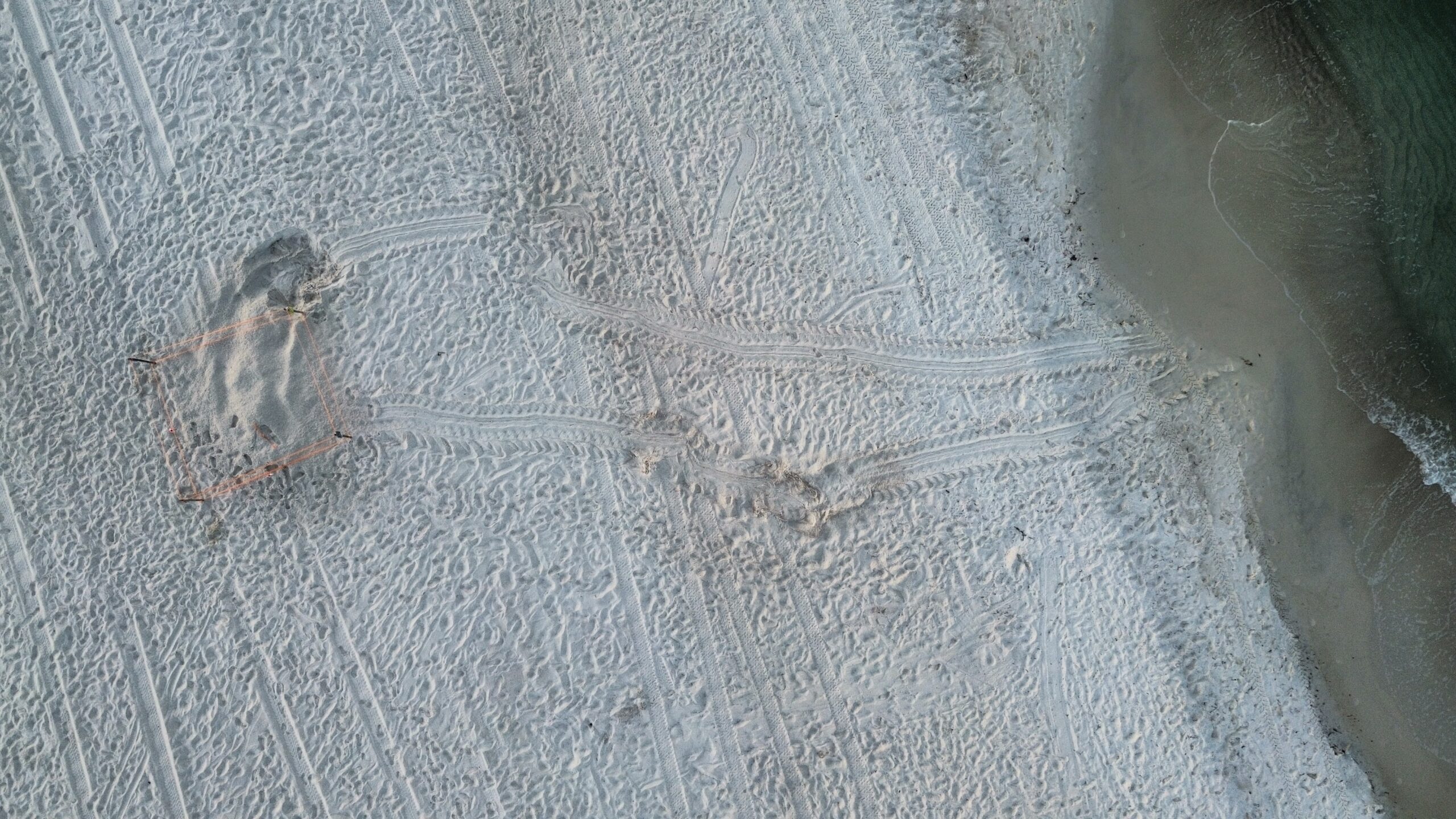
Nest 47 marked for protection showing the green crawl pattern, the large mound where she worked hard to cover and disguise her nest MTP-038

Hatching update

As we approach the end of September, we are excited to announce that we have reached over 3000 hatchlings having emerged so far this season! We still have seven nests incubating on the beach, including four green sea turtle nests, so we hope to see more hatchlings emerge before our season comes to a close. We do not announce the location of our nests or any dates related to a possible hatch. The only thing we announce (on Facebook) is an excavation that is scheduled once a nest has hatched and takes place 3-4 days after the hatch.

Please remember if you are lucky enough to be on the beach after dark and encounter hatchlings, please do not use any lights (not even red lights and no flash photography) to try to avoid any disorientation. If you do not see volunteers present but see hatchlings, please call the number on the blue sign of any nearby nest or call local PCB Police via non-emergency 850-233-5000 and we’ll send our volunteers out.

Volunteers excavating nest 42 (Photo courtesy of volunteer Jason Taylor)

Activities performed under MTP-038

Green hatchlings have arrived!

In 2024 we had no green nests on PCB.  In 2025, we were happy to see the greens return and we have seven green nests on the beach currently and one of those hatched last night

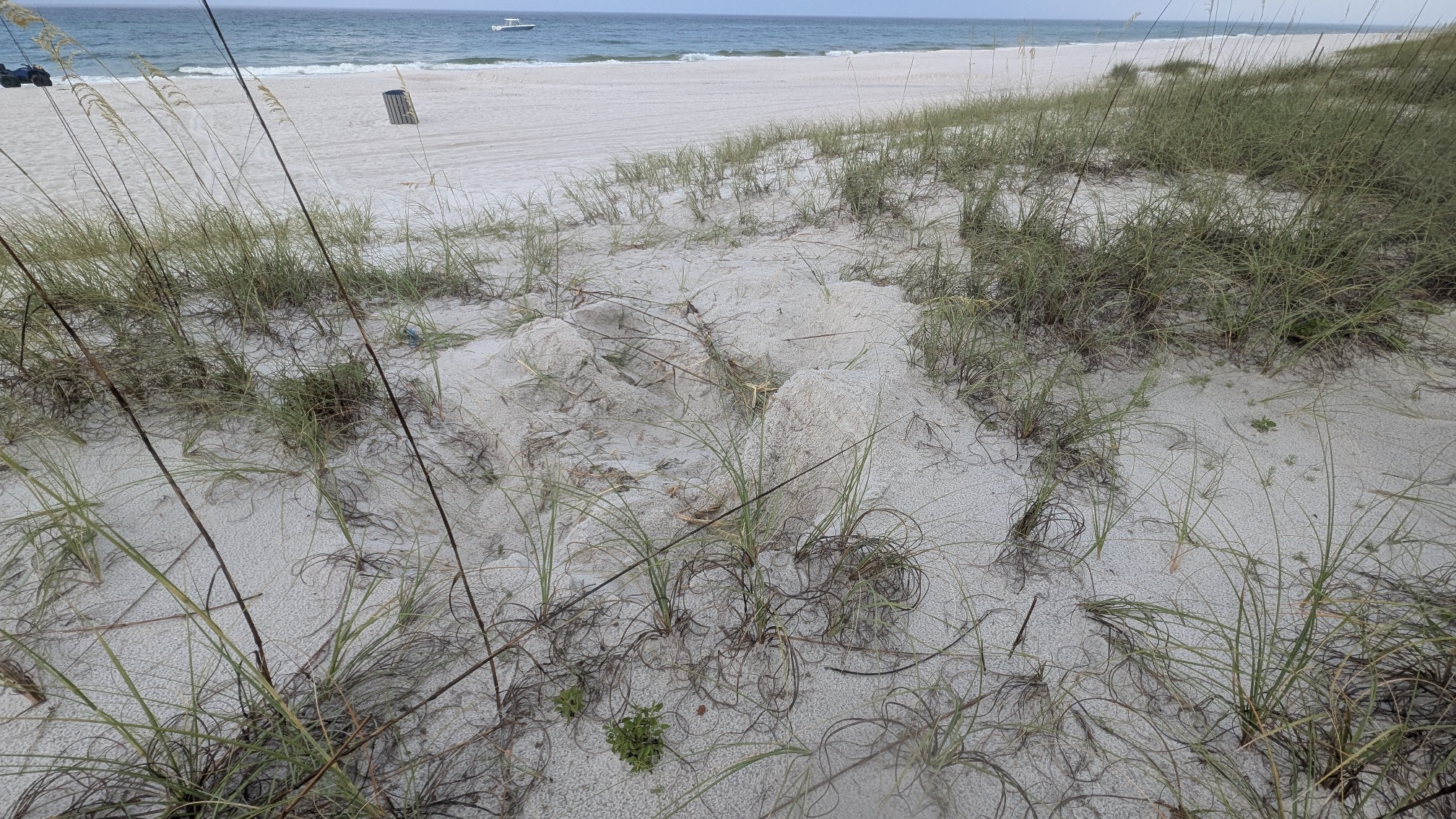
When greens nest they commit and crawl to a suitable location, move a lot of sand and commonly lay high beach or in the dunes (without respecting the protected sea oats).  That was the case for this nest when she nested in the dunes a couple months ago.  Last night hatchlings emerged and made their way to the water from this nest.  We’ll be announcing this excavation soon but couldn’t wait to share the news that green hatchlings have hit the beach this season


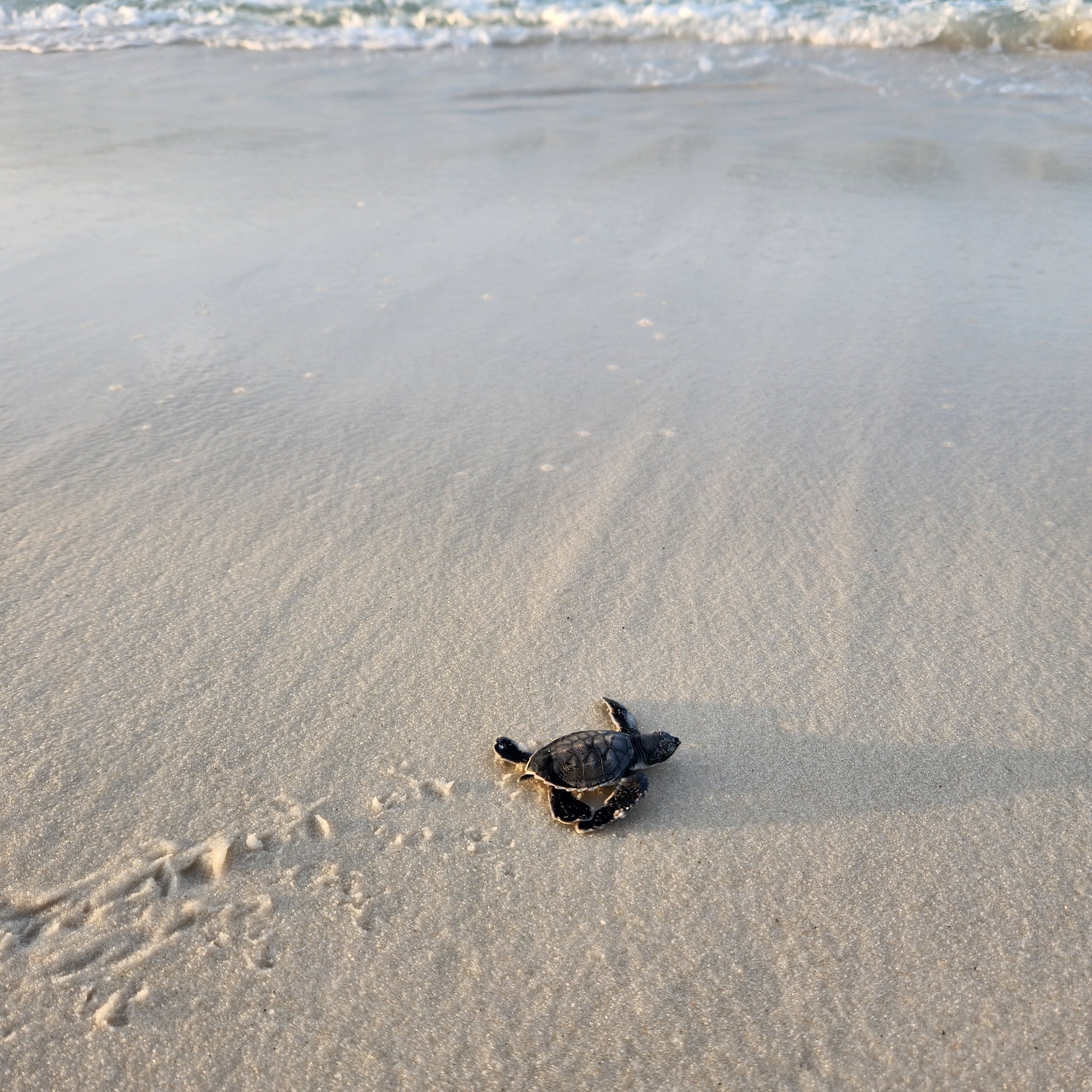
Photos: a green hatchling heading to the water during 2023 and the 2025 nest the morning it was found

Activities performed under MTP-038

2025 Excavations

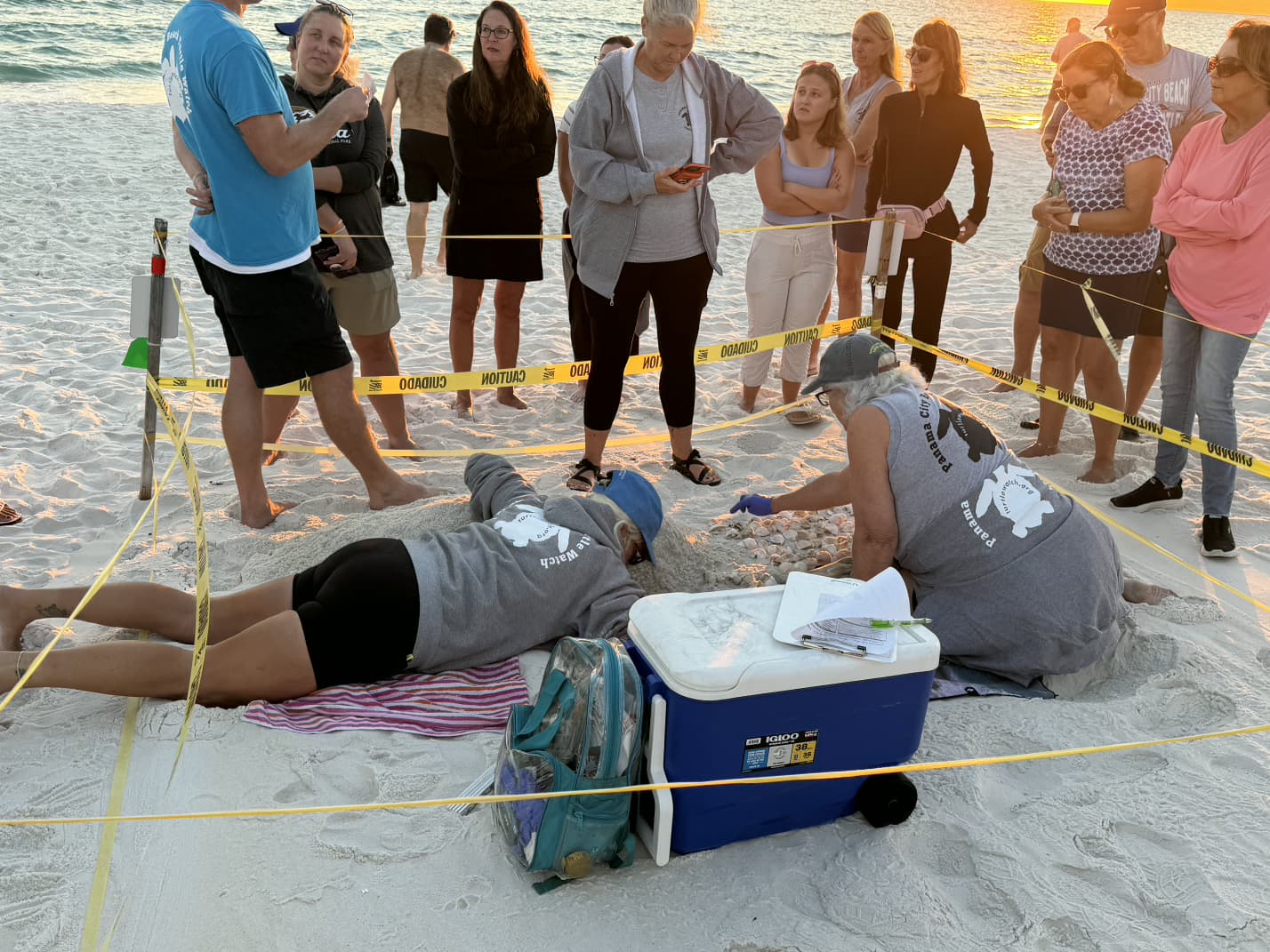
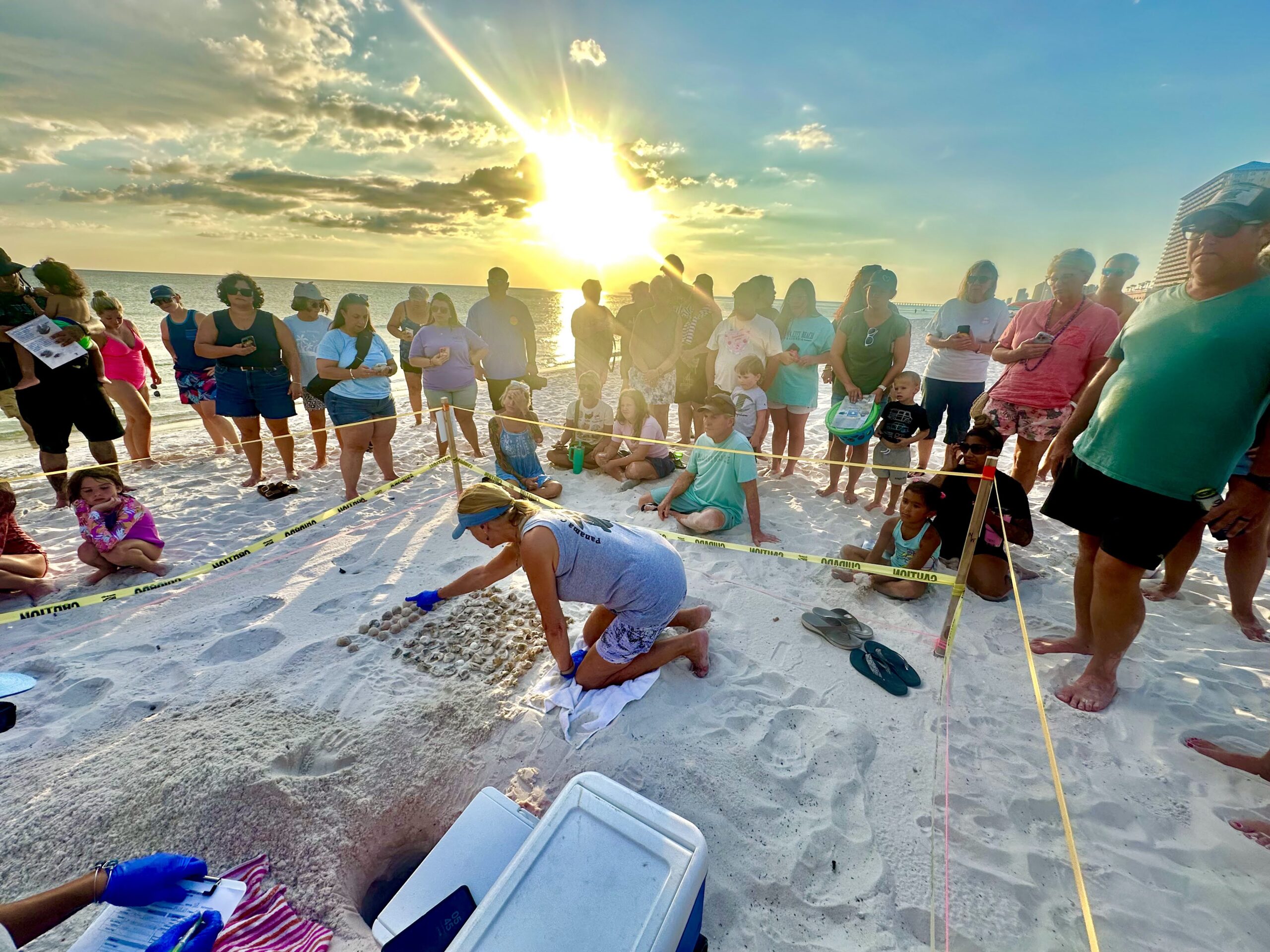
Under our FWC MTP-038, we conduct a nest excavation three to four nights following a hatch (or at such time that a nest hasn’t shown signs of hatch and is beyond it’s reasonable incubation period). Where possible, we announce those excavations on our Facebook page under Panama City Beach Turtle Watch under the Events section. Knowing not everyone can attend in person and that some beachgoers saw the nest during their visit and may be interested in the outcome, we try to do a Facebook Live of the excavation. If we are unable to Facebook Live, we’ll try to do a video and worst case we’ll post the results and maybe some pictures. Immediately following the excavation, we show samples of the nest contents to everyone in attendance.

For those of you not on Facebook, here is a video of the samples from nest 32. We had hatched eggs, unhatched eggs that won’t hatch at this point and in the chamber was a single hatchling that didn’t make it out four nights prior when the rest of the hatchlings emerged. This hatchling was released that evening into the Gulf.

Hatching and excavation season is underway!

After patiently waiting just over two months since our first 2025 PCB Sea Turtle nest was laid, we have had a nest hatch….not just one but seven nests have hatched in the last four nights. We don’t publish our nest locations or the date they were laid, but we do announce excavations when possible.

An excavation is conducted per the FWC Permit we operate under. Our volunteers will share information on how we found the nest, protected it and when/how it hatched. We’ll also share information on the sea turtle species common to our beaches and how you can help protect these wonderful creatures! Everyone attending will have a chance to see a sampling of the nest contents and take photos since the excavation occurs during daylight hours.

Following a hatch, if we are able to schedule a public excavation, we will post it as an Event here on our Facebook page, Panama City Beach Turtle Watch, with 1-2 days notice. So stay tuned as we hope to have many upcoming excavations over the next two to three months.

If you are lucky enough to be on the beach and encounter hatchlings (nests commonly hatch overnight) at night, refrain from using any lights or flash photography around the hatchlings as it can cause disorientation. Please call the local hotline found on the blue sign at the nest or PCB Police non-emergency at 850-233-5000 so we can have our volunteers respond.


Photo: volunteers laying out the contents (hatched an unhatched eggs) of a nest during a 2024 excavation, work conducted under MTP-038

Our 2024 Season Recap

Our 2024 season has officially come to a close as we wrapped up all activities involved in operating under our FWC issued marine turtle permits.

We’d like to thank all of our surveyors, volunteers, local agencies, residents and visitors who played a role in the protection of the Loggerhead sea turtles in Panama City Beach, FL during our 2024 season.

We had 34 loggerhead nests on the beach this season stretching from our eastern to western boundaries. Volunteers witnessed nesting loggerheads and were able to apply passive tags on four nesting loggerheads! We endured nest impacts (development stopped/eggs washed out) from tropical storm Alberto and from hurricanes Francine and Helene that made landfall in other areas of the Gulf coast. We appreciate the help from our local police, code enforcement and our local lifeguards. We enjoyed the opportunity to share information about our program and sea turtles at local events, schools and excavations.

Below we have recapped some of our 2024 season highlights. We look forward to being ready to start our season again May 1, 2025!

All work/photos conducted under MTP-038, MTP-271, MTP-286

Hatching continues and day 80 approaches for washover nests

Our volunteers have stayed busy the last week with nests hatching every few days, around incubation day 55. Many hatchlings have been disoriented requiring they be recovered and released on a darker part of our beach. After a nest hatches, an excavation is scheduled to assess the nest contents with the excavation and results being announced on Facebook.

This week we will reach the day 80 mark for several nests that were impacted by Tropical Storm Alberto. Three of these nests suffered a good deal of wash over due to high surf and 2-3 foot of additional sand being placed on the nest. Others had washout or washover that likely stopped the development of the eggs. Volunteers will schedule private excavations of these nests to try to locate the eggs to at least determine how many had been laid. These nests are numbered in the teens, so we hope that those females returned weeks later here in the Panhandle to lay some other nests that are having better hatch success.

We appreciate all of the hours our volunteers are spending now on hatching monitoring, recovery and excavations!

Volunteers searching for eggs of a nest that experienced some washout during Tropical Storm Alberto in June

Transition from nesting to hatching

We are well into our hatching season with nest 23 having recently hatched!

We continue checking the beach in the mornings for new nests but have not had any recently and remain at 34 nests having been marked for protection this season. On the flip side we are having nests hatch every couple of days at this point, commonly occurring overnight. Our volunteers have been trained by FWC on rescue and recovery of disoriented hatchlings. We have had a couple of nests where the hatchlings made it to the water unassisted but we have had many more nests hatch where the hatchlings have been disoriented and rescued and released that same evening by volunteers. Our volunteers then excavate the nest 3-4 days after a hatch to determine the hatch success based on the nest contents which will then be reported to FWC. We announce public excavations via our Facebook page Events section and we stream on Panama City Beach Turtle Watch Facebook or post videos/photos as a way to keep everyone updated on the results so stay tuned there for those details. We do have several nests that experienced washover and sand accretion that may have slowed or stopped development of the eggs. We will conduct private excavations of those when the time comes. In the meantime we’ll stay busy with the remaining non-washed over nests!

Everyone can do their part in by leaving the beaches clean, dark and flat. Every little bit can help and make a difference for this protected species.

Visible depression following a recent hatch
Excavation where contents are extracted from the nest, categorized, data recorded and anything other than research samples or live hatchlings are returned to the sand to become beach nourishment
Live hatchlings found during an excavation. Even after 3 additional days following the main hatch they hadn’t successfully emerged and needed our help. They were released that night on a dark local beach.