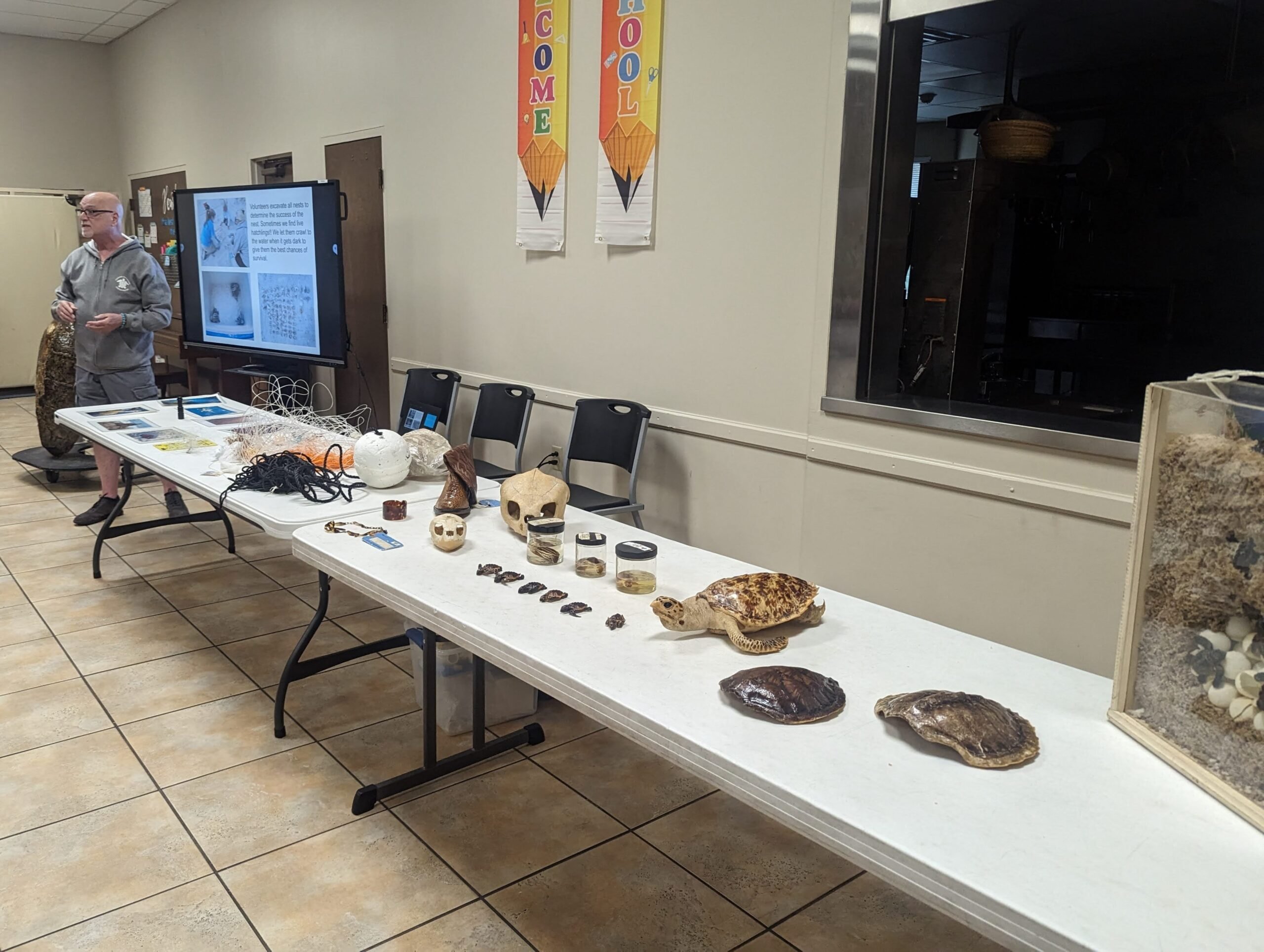
What else do our volunteers do when they aren’t on the beach protecting the sea turtles and nests? They spend time sharing information about our program, sea turtle species and ways we can all help protect them.
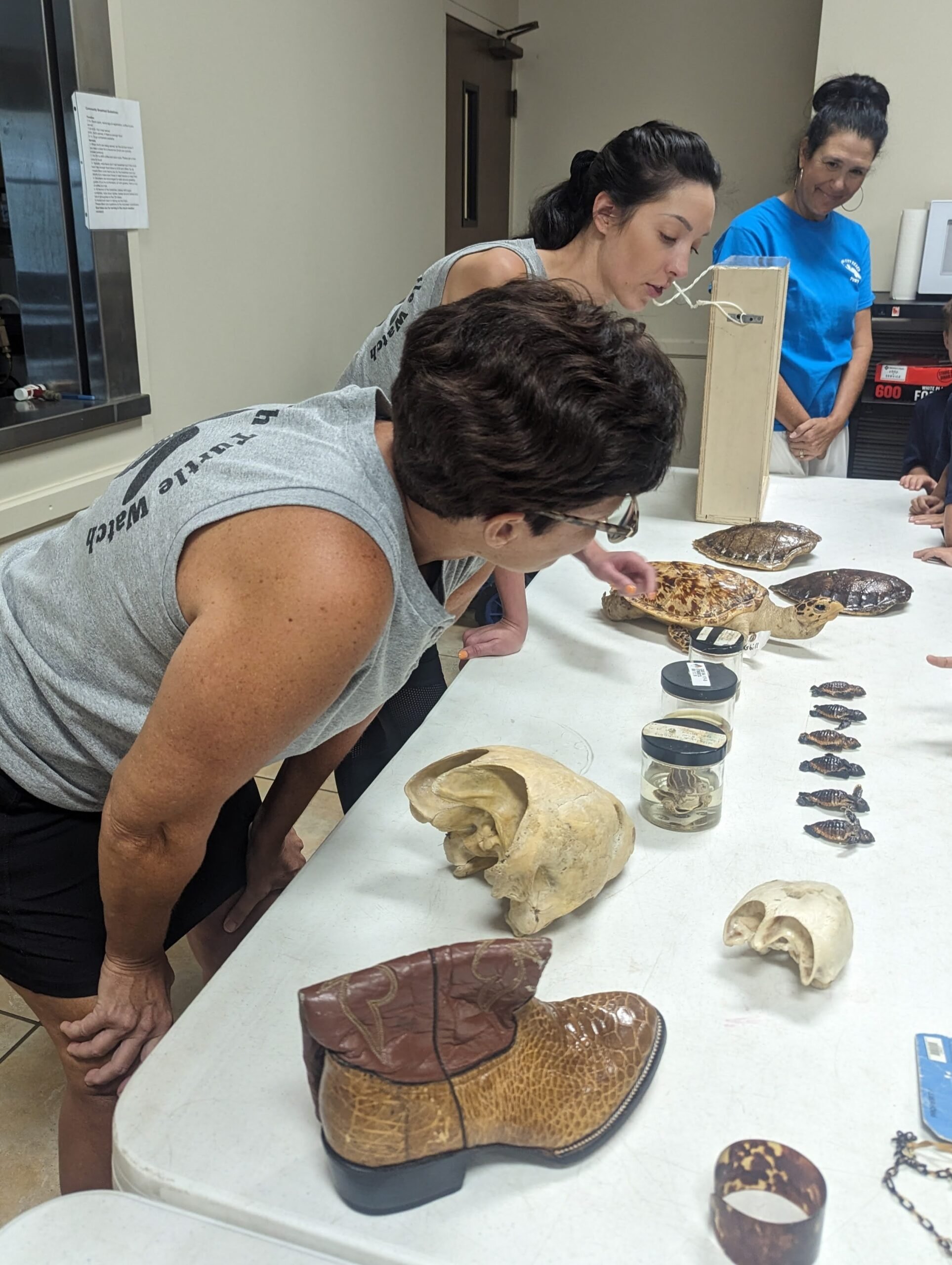
We appreciate the opportunity to recently visit Panama City Trilingual School to share this important information with them. The students were attentive and engaged as they listened to our volunteers and asked their questions.
Thank you to our volunteers for the many ways they contribute to our non-profit organization!
FWC MTP-038 allows for the possession of sea turtle specimens to use for educational purposes Education Outreach Presentation
Students get a close look at our education outreach items
First off our thoughts are with the cities and people in the path of Hurricane Idalia and all of the people that will be helping them recover and rebuild.
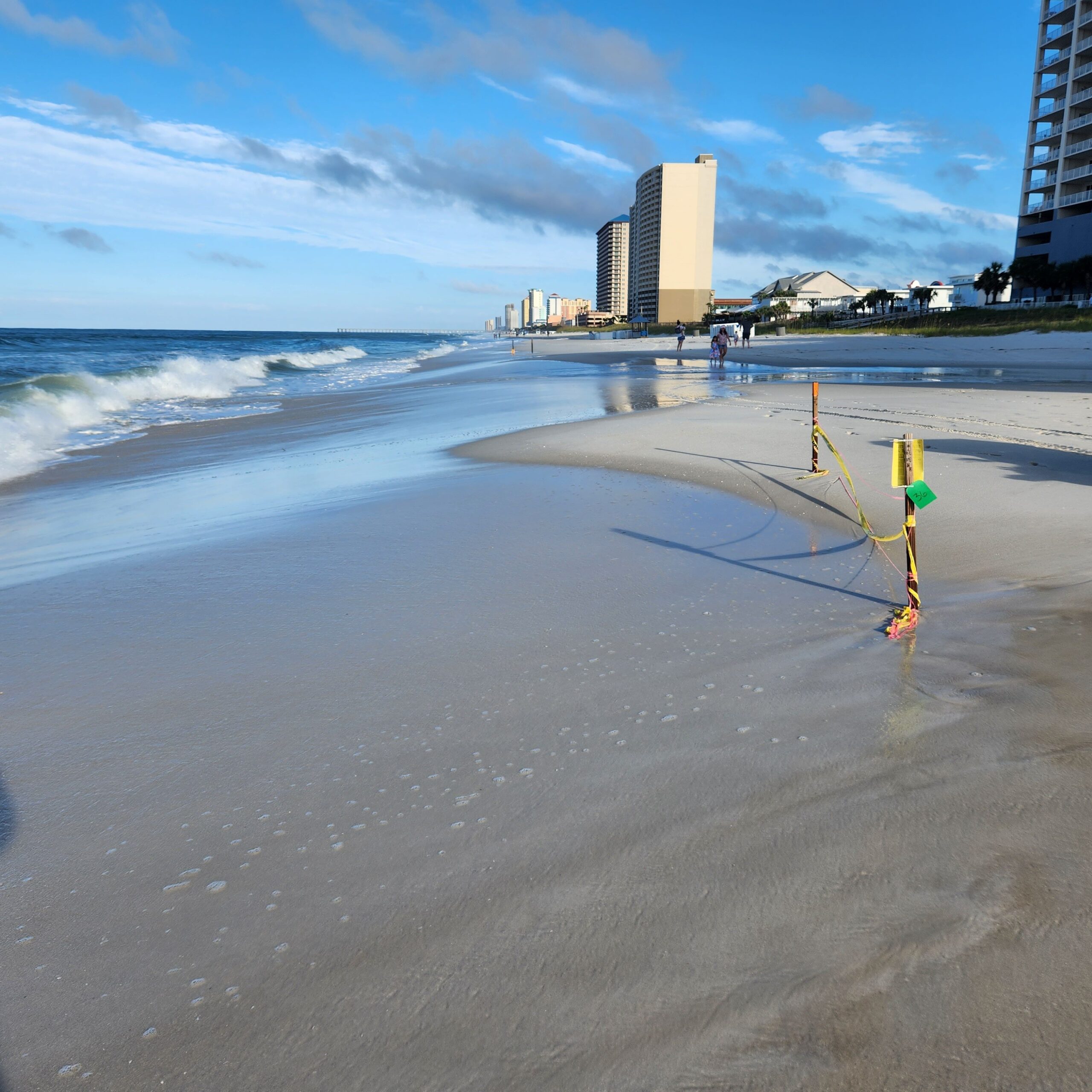
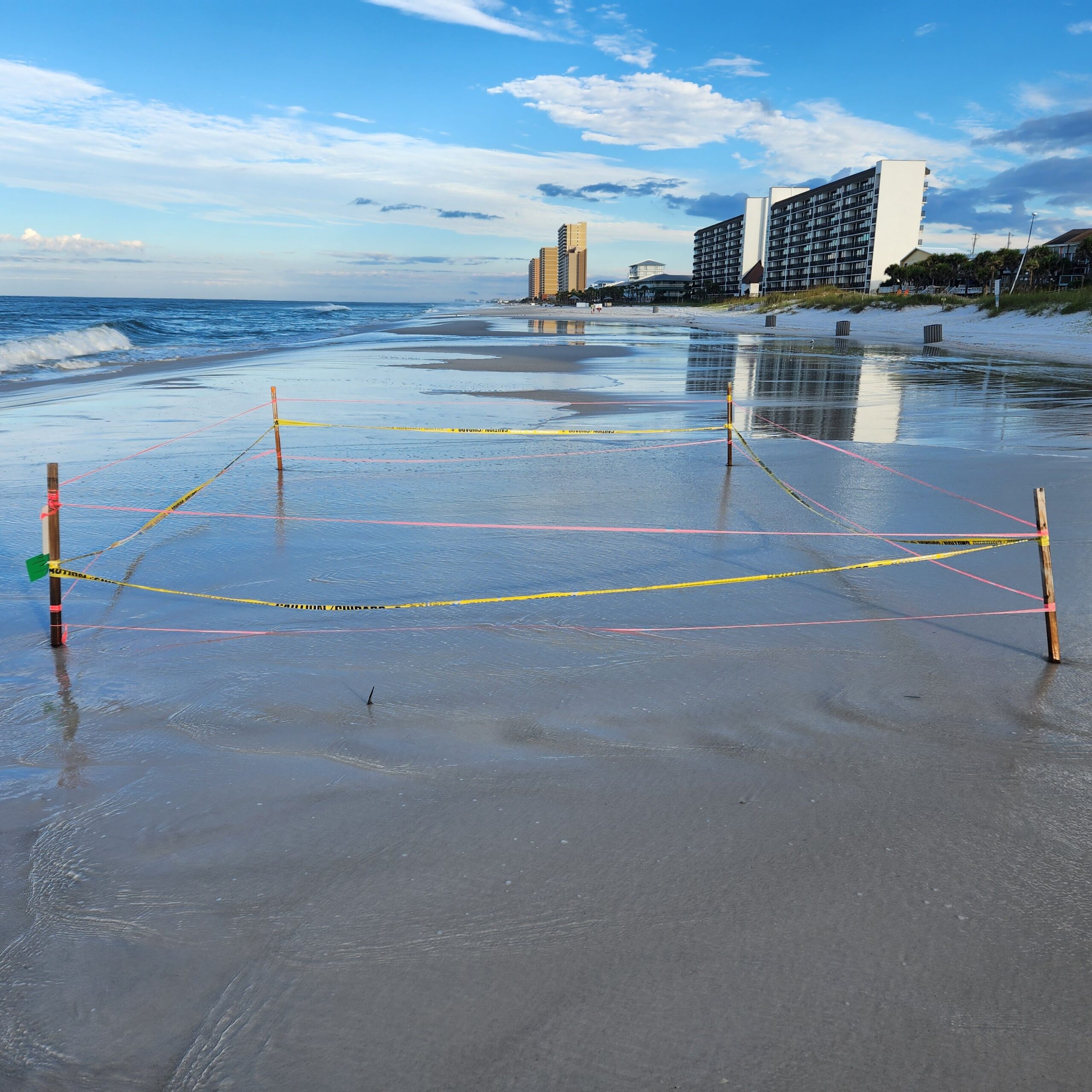
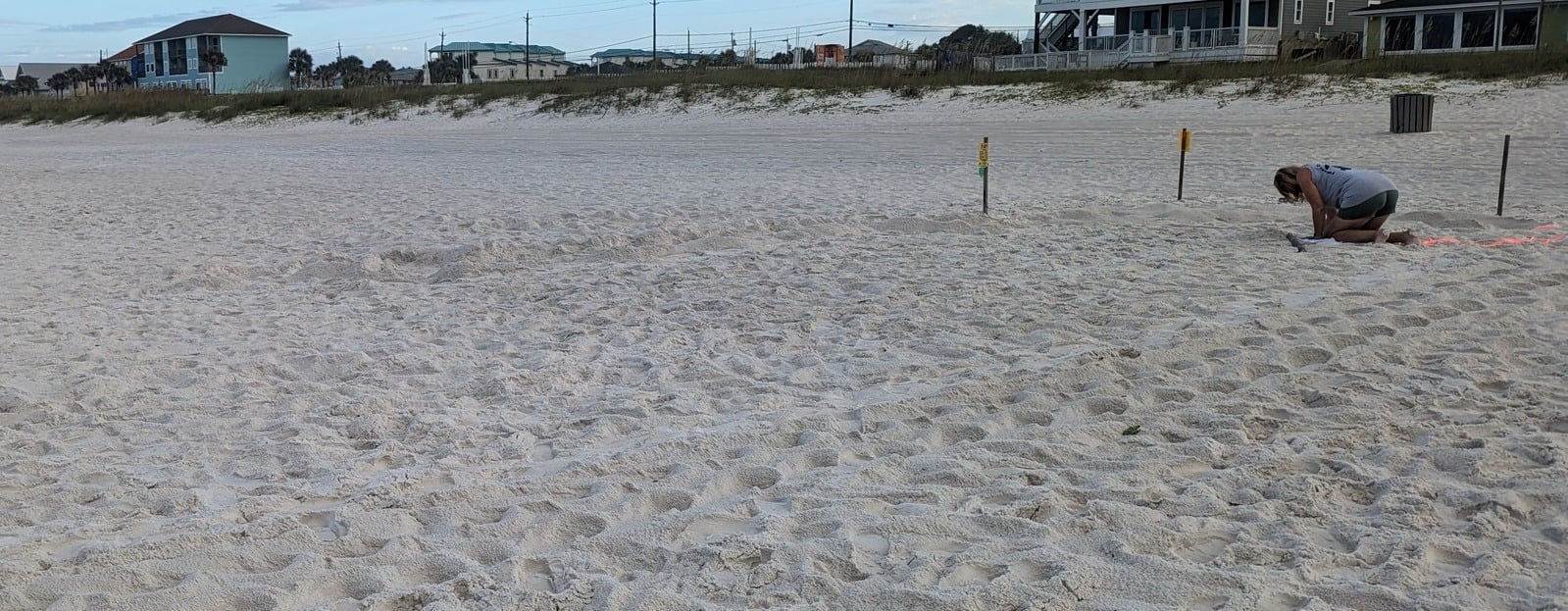
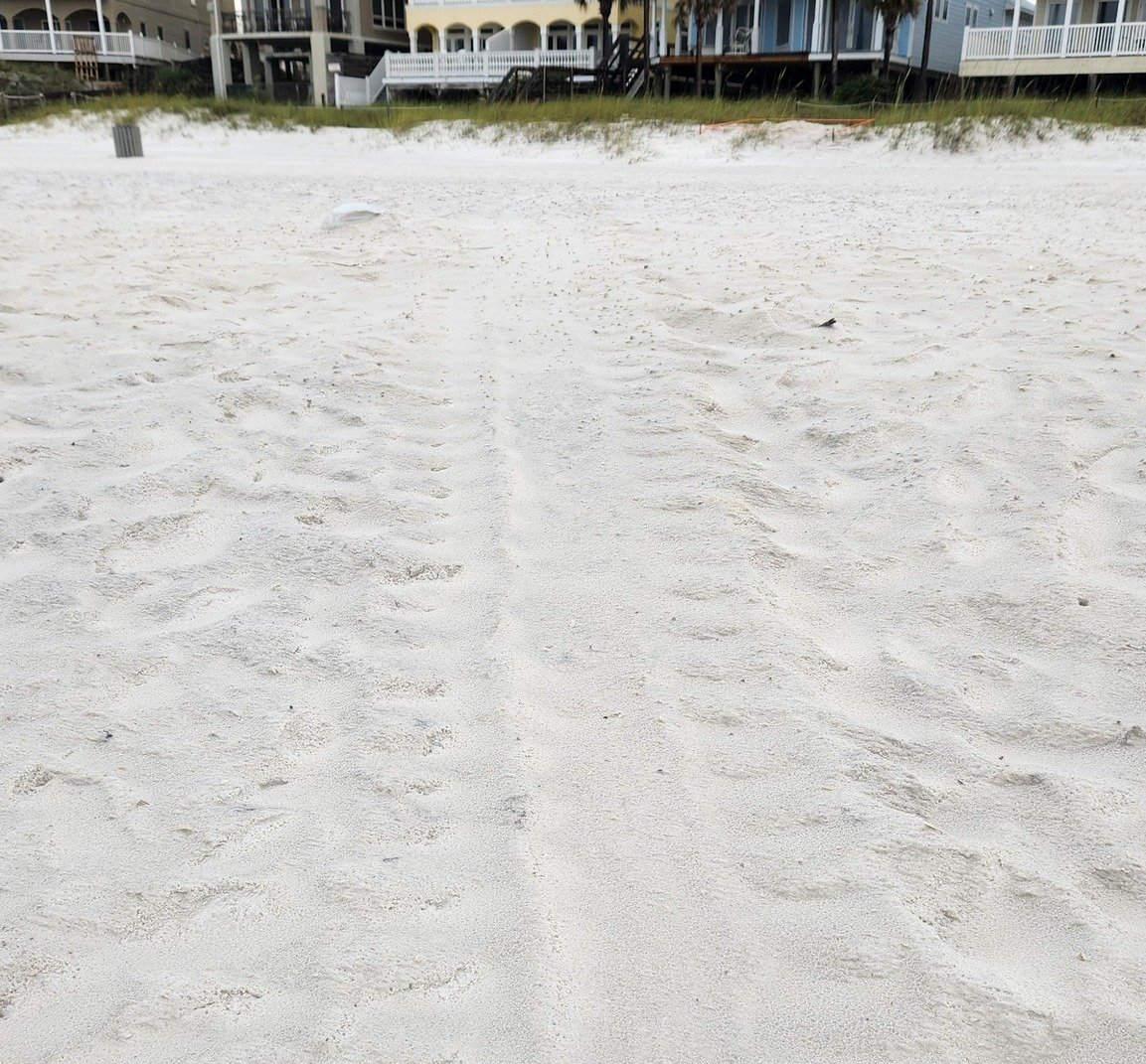
We are fortunate here in PCB to have only experienced high surf overnight causing the waves to push up to high beach. Our surveyors assessed all nests this morning and found that any nest not in the dunes had some or a lot of washover. Some or all of the stakes washed away from some nest areas. We have restaked/repaired the nest markings that we could and will give all nests on our beach a full 80 days from when they were laid in case the water slows the incubation.
The sea turtle nests can handle some amounts of water but they can not tolerate inundation or sitting in water, that stops the development of the egg. We will continue to monitor the nests and expect some of them may still hatch. Therefore, we’ll continue to announce excavations of hatched nests as they are scheduled. As we excavate unhatched nests we’ll post those results as well as we know some of you have a vested interest in some particular nests.
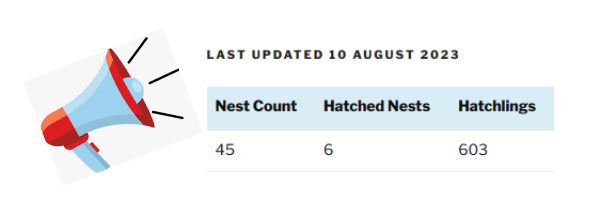
We won’t know the full impact of the storm until the season is over (when the last nest has hatched or 80 days from when the last nest is laid) but we will continue to monitor and hope we get to add to our 2023 hatchling count. To date we have had 46 nest, with 20 having hatched producing 1700+ hatchlings! Morning survey found south stakes washed out, restaked
Morning survey found nest with heavy washover, likely won’t hatch at this pointMorning survey found light washover
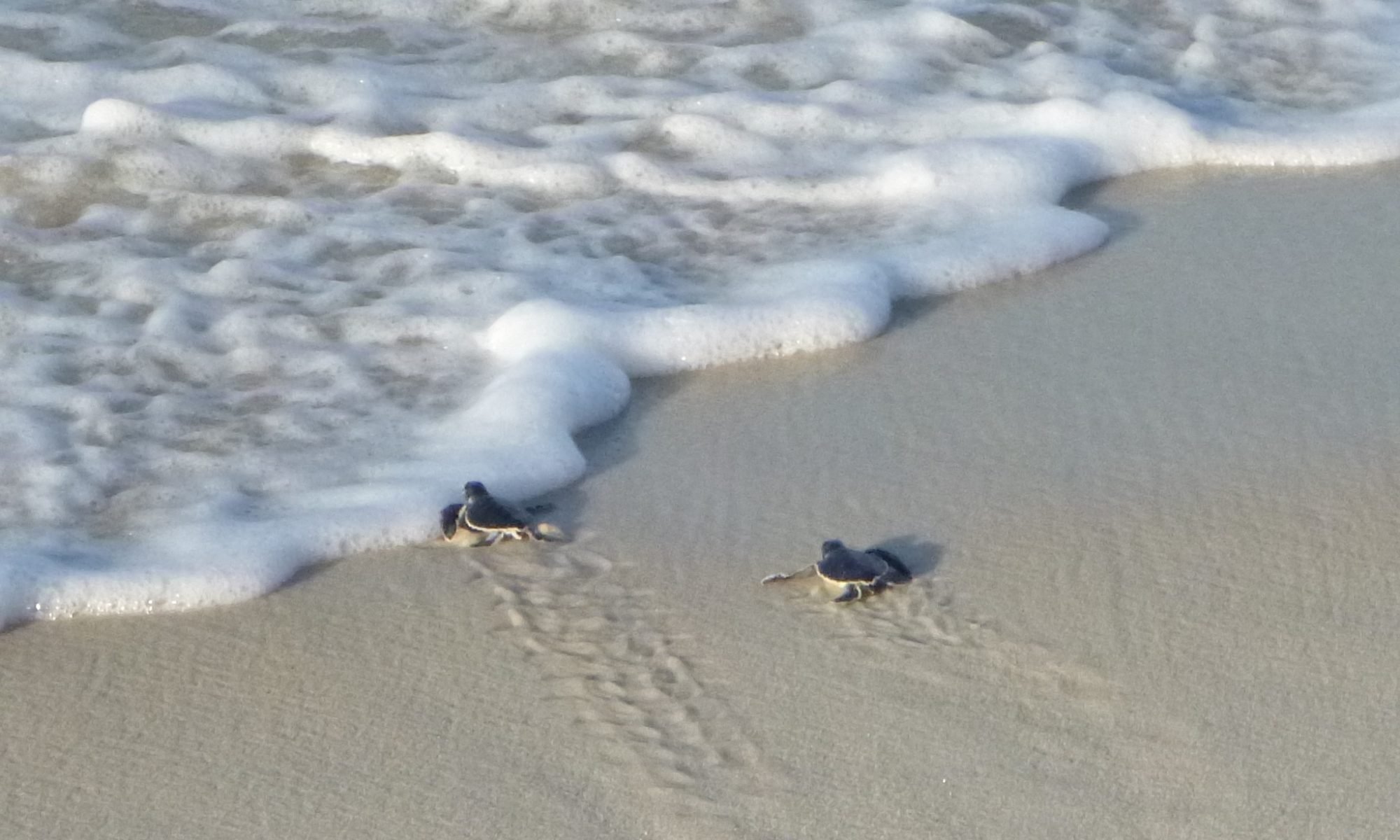
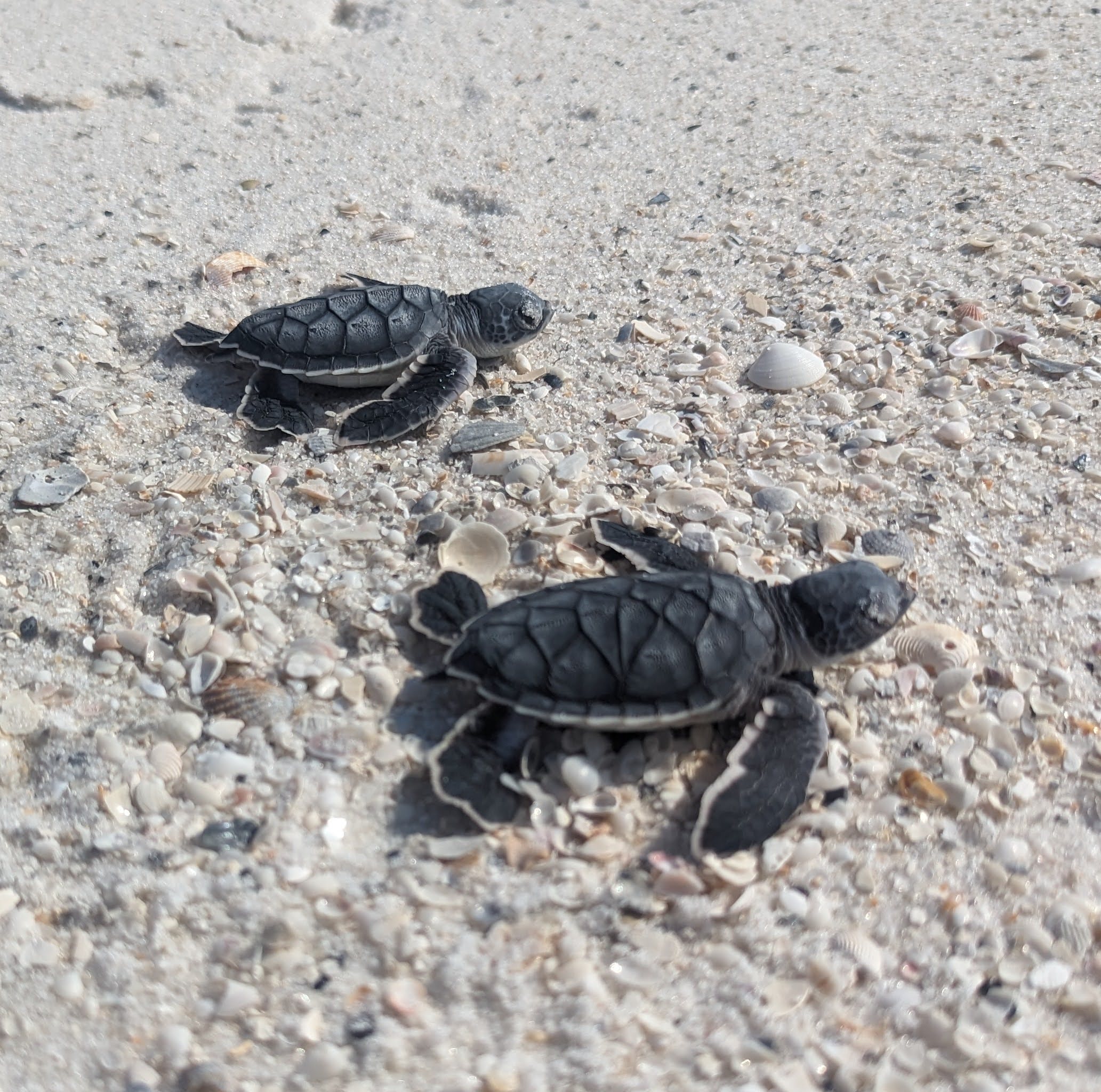
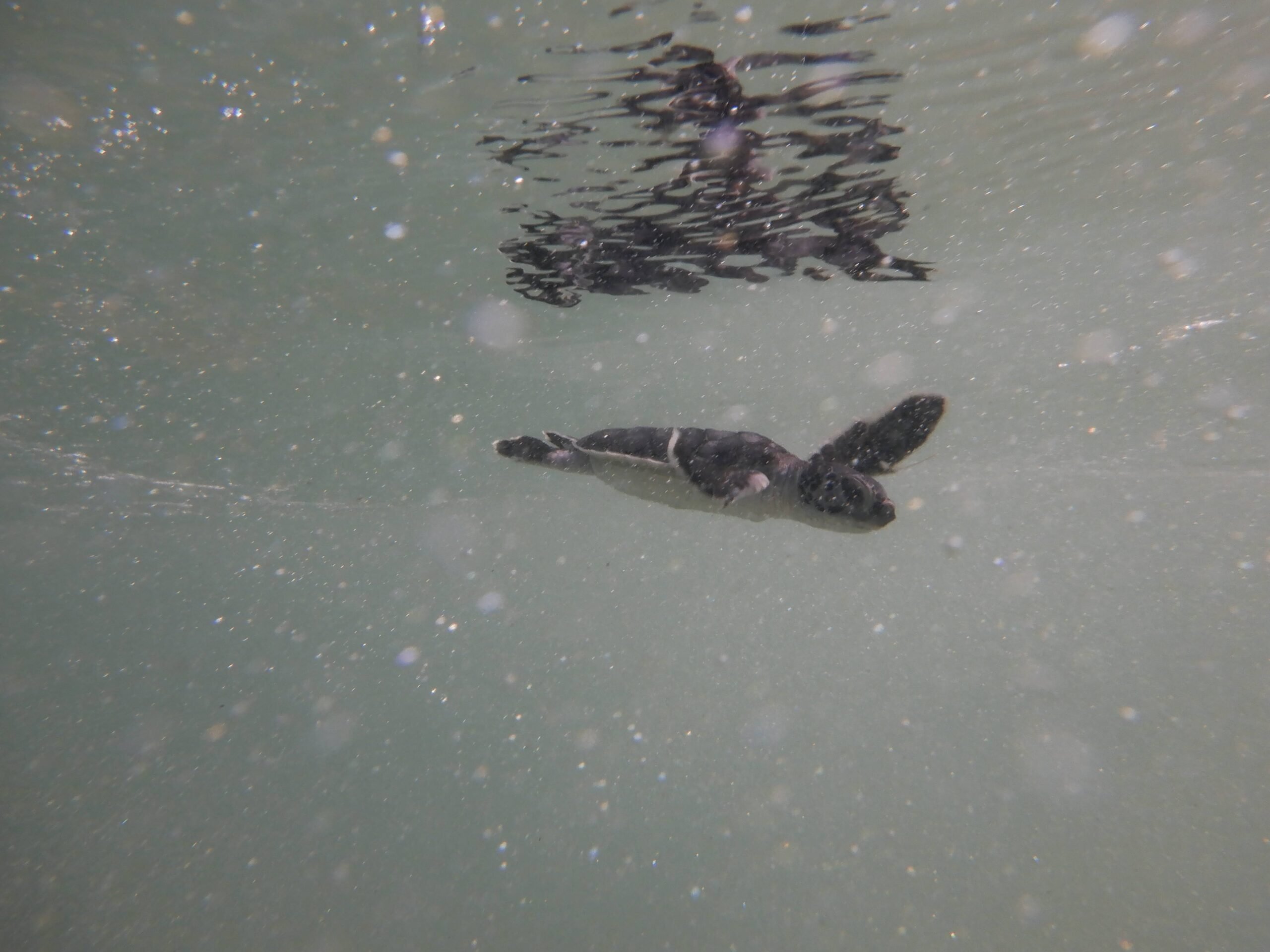
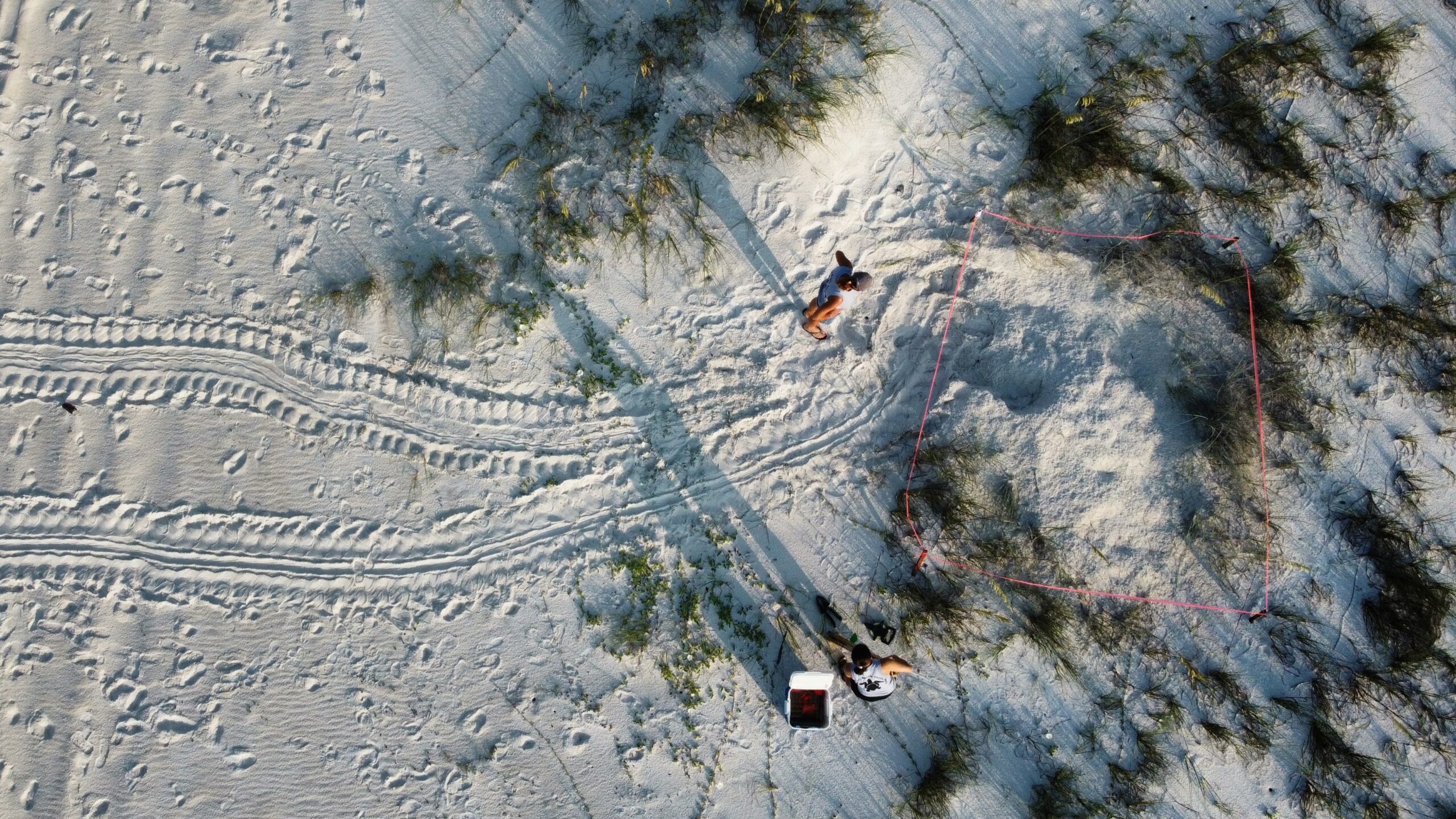
Our first green nest of the season has hatched and has been excavated! Beach goers received a surprise in the daytime when they witnessed 4 green hatchlings emerge from a newly formed depression in the peak afternoon heat! Fortunately, they notified PCB TW volunteers to ensure they reached the water following on their long crawl from the dunes.
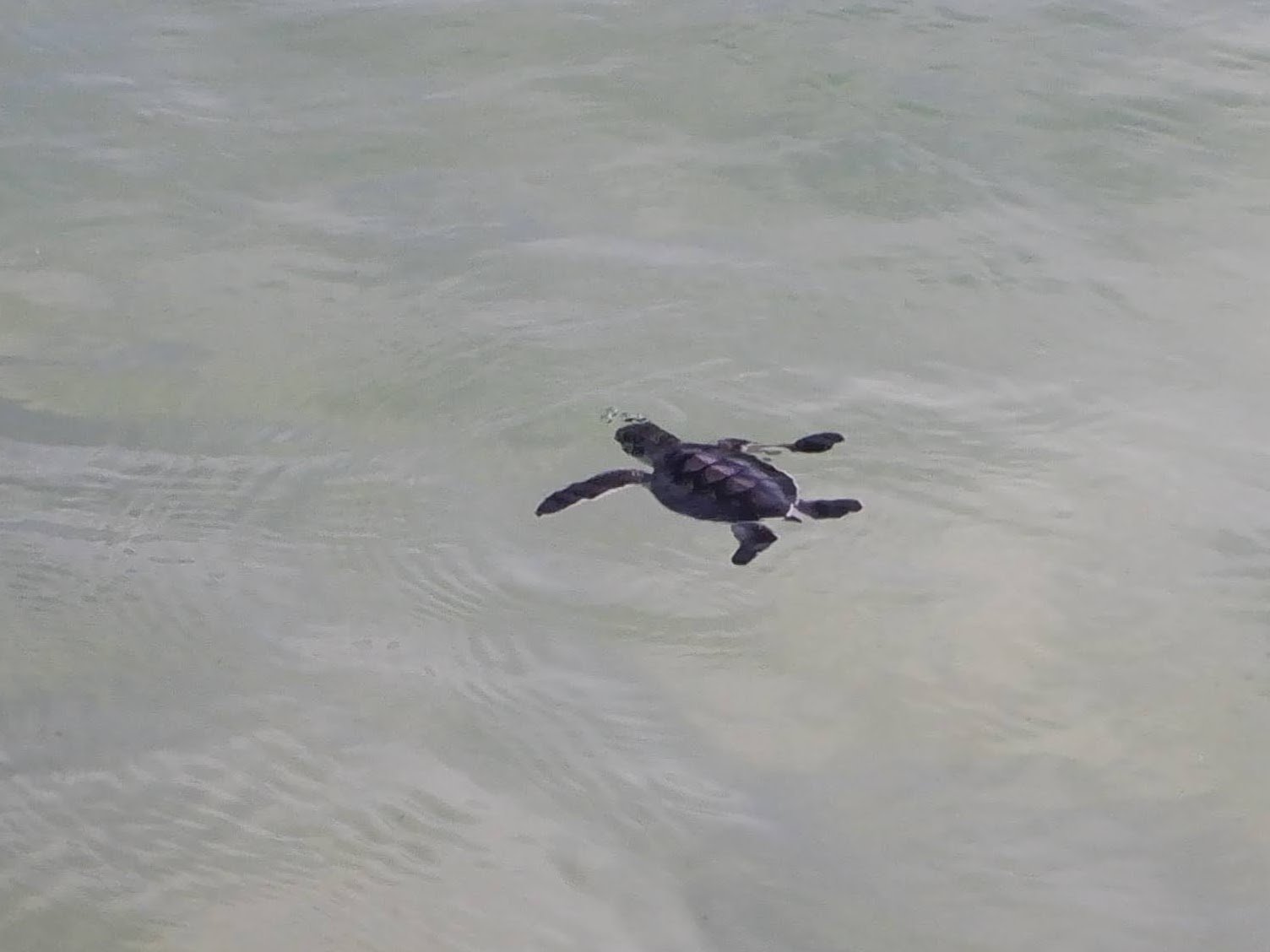
Green hatchling swimming at surface, vulnerable to predators so we try to help every single oneGreen hatchling swimming just below the surface
Later that evening, the full nest boiled and all of the hatchlings, in a much cooler time of night, made their way straight to the water.
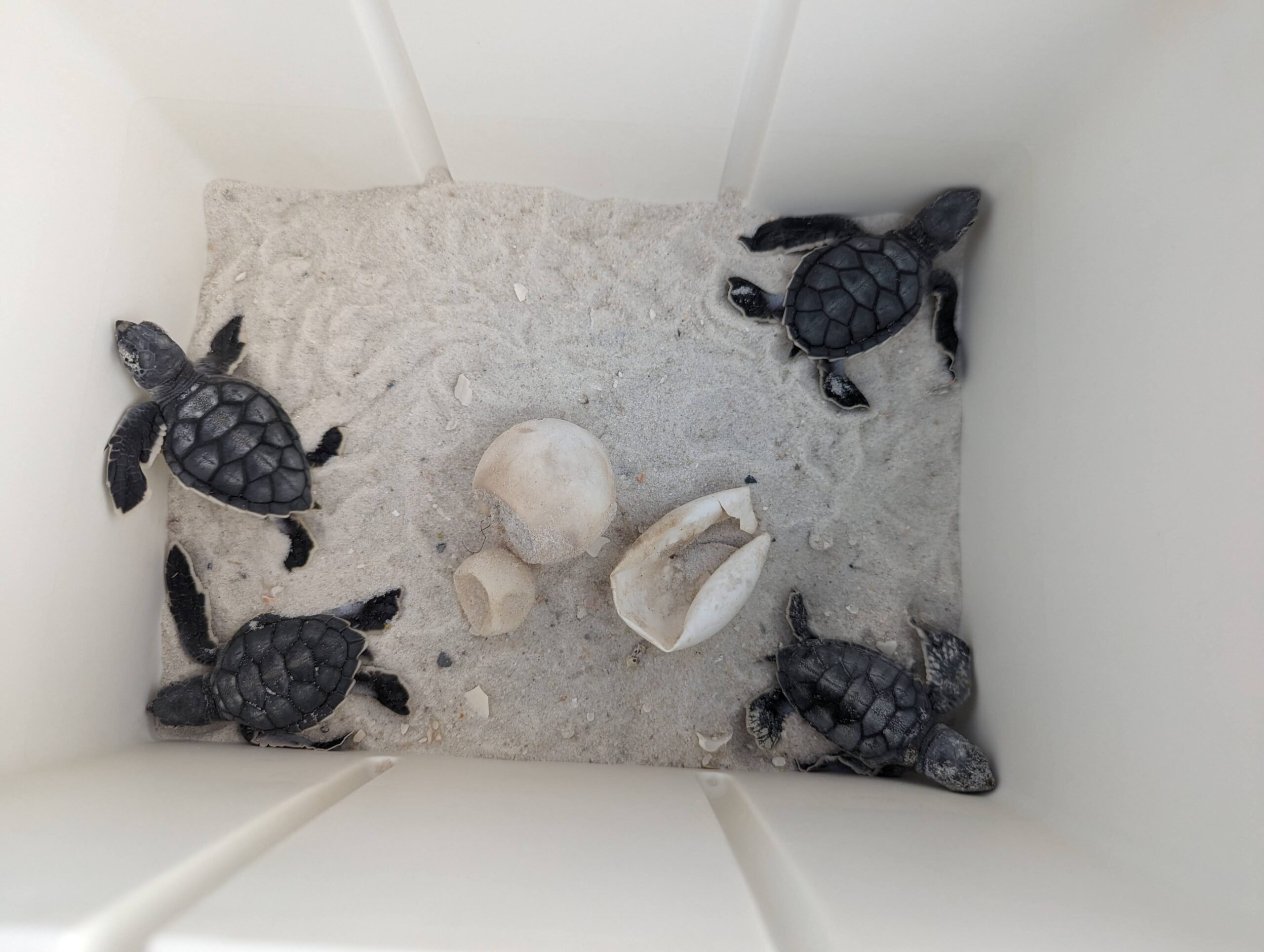
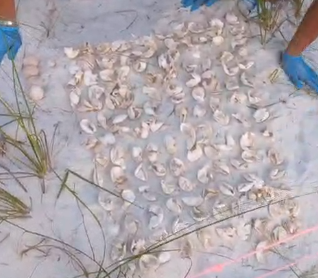
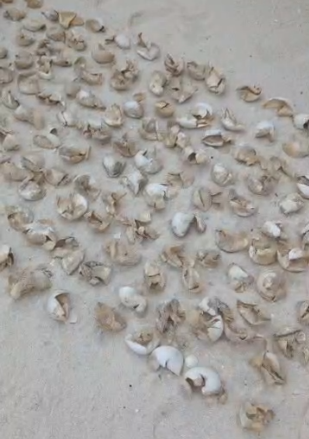
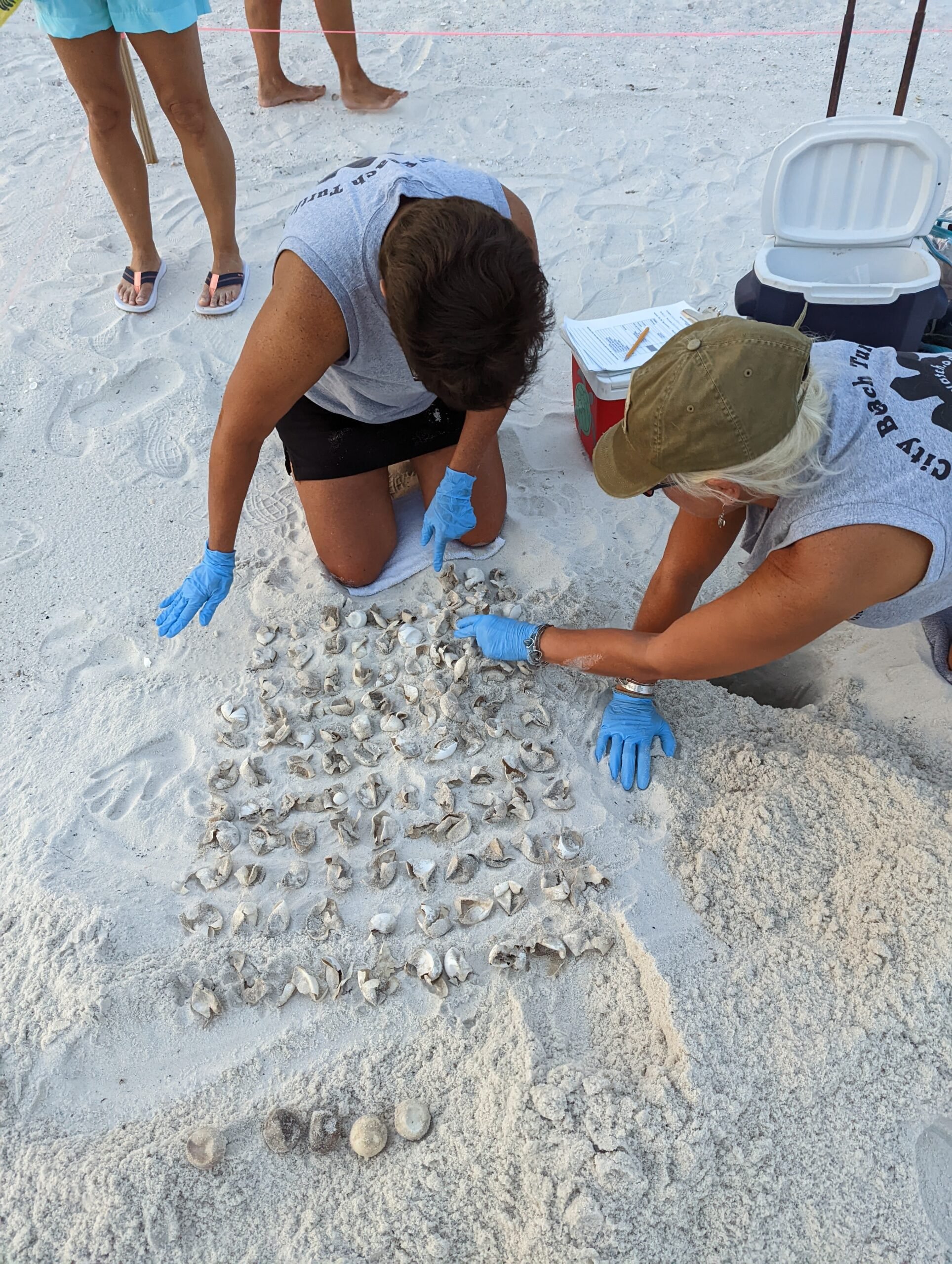
In accordance with our FWC permit, we conducted an excavation of the nest 3 days later and found 4 live hatchlings in the chamber. Three of those hatchlings were entangled in roots from the dune vegetation in the first few inches of the chamber. This is not uncommon for nests laid in the dunes and fortunately we found them alive during the excavation. Another live hatchling was found among the 133 hatched egg shells about 24 inches deep! Overall the nest was very successful! Check out our Facebook live recording of Nest 18’s excavation on August 27 to see the hatchlings as they were found in the chamber, quite a relief to see the little flippers begin moving as they were freed from the roots!
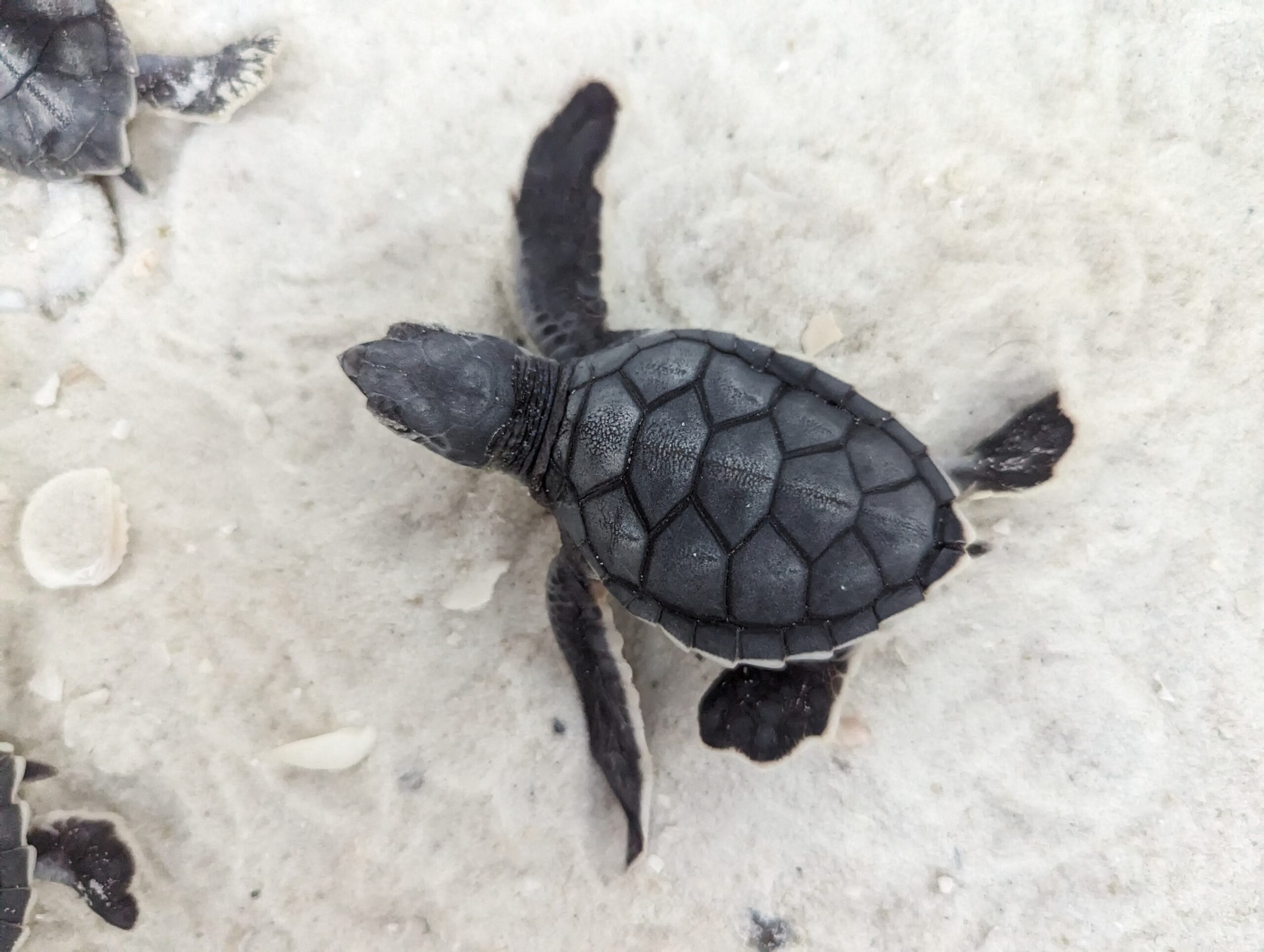
Nest 18 sample contents include a hatched egg, unhatched egg, spacer egg and 4 live hatchlingsGreen hatchlings are identified by their scute pattern on their carapace (their hard top shell)Nest 18 eggs from excavation
As a reminder, sea oats are protected in Florida and are vital to our dune system. As volunteers we do our best to not disturb the sea oats and ask that you do the same if you encounter a nest in the dunes.
We’ll continue to monitor our remaining loggerhead and green nests for hatch activity and post excavations as we are able to schedule them for public attendance.
If you see a nesting or hatching sea turtle on the beach and volunteers aren’t present, please contact PCB non-emergency police at 850-233-5000 and they will contact our volunteers. Thank you for leaving the beach clean, dark and flat!
We have crossed the 1K mark for hatchlings so far this season!
We have had 12 nests hatch producing 1130 hatchlings so far!
Many of these nests have been disoriented meaning the hatchlings go towards the artificial lights instead of the Gulf of Mexico. We appreciate our volunteers for the many hours they dedicate to our nests during hatching season. They spend a lot of time in the dark and have paperwork to fill out following a hatch to help us document hatch behavior and disorientation occurrences.
During our hatching season, we should all remember the moto Clean, Dark and Flat. These are ways we can help these hatchlings reach the water quickly so they can begin their journey! Volunteers filling out paperwork post hatch of a disoriented nest. Courtesy of Joyce, a beach goer lucky enough to witness the hatch and our volunteer’s efforts
We are happy to announce that we have reached 45 nests this season which exceeds our 2022 total nest count!
Even better news, we have a total of 9 green sea turtle nests marked for protection, a new record for our beach in a given season!
Nesting can run through early September so we hope to see our nest count continue to grow.
We are also getting into our busy hatching season as evident by our excavation announcements.
If you see a nesting or hatching turtle on the beach without our volunteers present, please contact PCB non-emergency police at 850-233-5000 so they can contact our volunteers.
“When will a nest hatch?” This is one of our most commonly asked questions. So here’s some info that may help.
Nesting season begins in May and we number the nests as we find them. So…they should hatch roughly in the order that they were found. So far nests 1-4 have hatched, so we’ll be watching for other low numbered nests to hatch soon. And then it will take several weeks for the higher numbered nests to hatch.
Currently we expect hatching to occur through early October as we continue to find new nests including Nest 43 laid by a loggerhead overnight last night.
The FWC permit we operate under doesn’t allow us to release nest locations, date laid or any kind of prediction on when it will hatch. We will announce on Facebook (Panama City Beach Turtle Watch) when a nest has hatched and an excavation is scheduled. Or if it doesn’t hatch (possible if inundated with water for nests close to the surf), we’ll announce that as well. So if you see a nest on the beach and you want to know the results, note the nest number and stay tuned to our Facebook page.
Remember, if you see a nesting sea turtle or a hatchling on the beach and PCB TW volunteers aren’t present, please call PCB non-emergency police at 850-233-5000 and they will get in touch with our volunteers. Volunteers prepare to begin an excavation as part of MTP-038
A hatched nest as seen during a night visit under MTP-271
We have had our first successful loggerhead hatch this season (nest 2) and we continue to find new nests with the latest being another green nest!
We are up to 39 nests so far this season with 32 loggerheads and 7 greens.
On our beaches here in the panhandle, average incubation is about 2 months. With hatching season starting we expect to see more nests hatch in the coming weeks. We don’t announce the nest locations nor when they may hatch but be aware we number the nests as we find them. We will announce the public excavations when they are scheduled following a hatch.
If you are lucky enough to see a nesting turtle, a nest hatching or hatchlings on the beach and our volunteers aren’t present, please call PCB non-emergency police at 850-233-5000 with the nest number/location so our volunteers can respond. Please do not use any light or flash photography as it disorients the turtles.
On behalf of the sea turtles and everyone who visits our beaches, we appreciate you keeping our beaches Clean, Dark and Flat!
Volunteers marking a green nestExcavation of nest 2 revealed 15 hatched eggs (conducted under MTP-038)
Our nesting season is in full swing having reached 30 nests and 20 false crawls.
We currently have three Green Sea Turtle nests on our beach and the rest are loggerhead. As a reminder, nesting (and hatching) typically occurs overnight so be sure to keep your lights off, don’t use flash photography if you encounter a sea turtle and give her space. Crawling on land when you are designed for water can be tiring, so we don’t want to stress or disturb a nesting turtle!
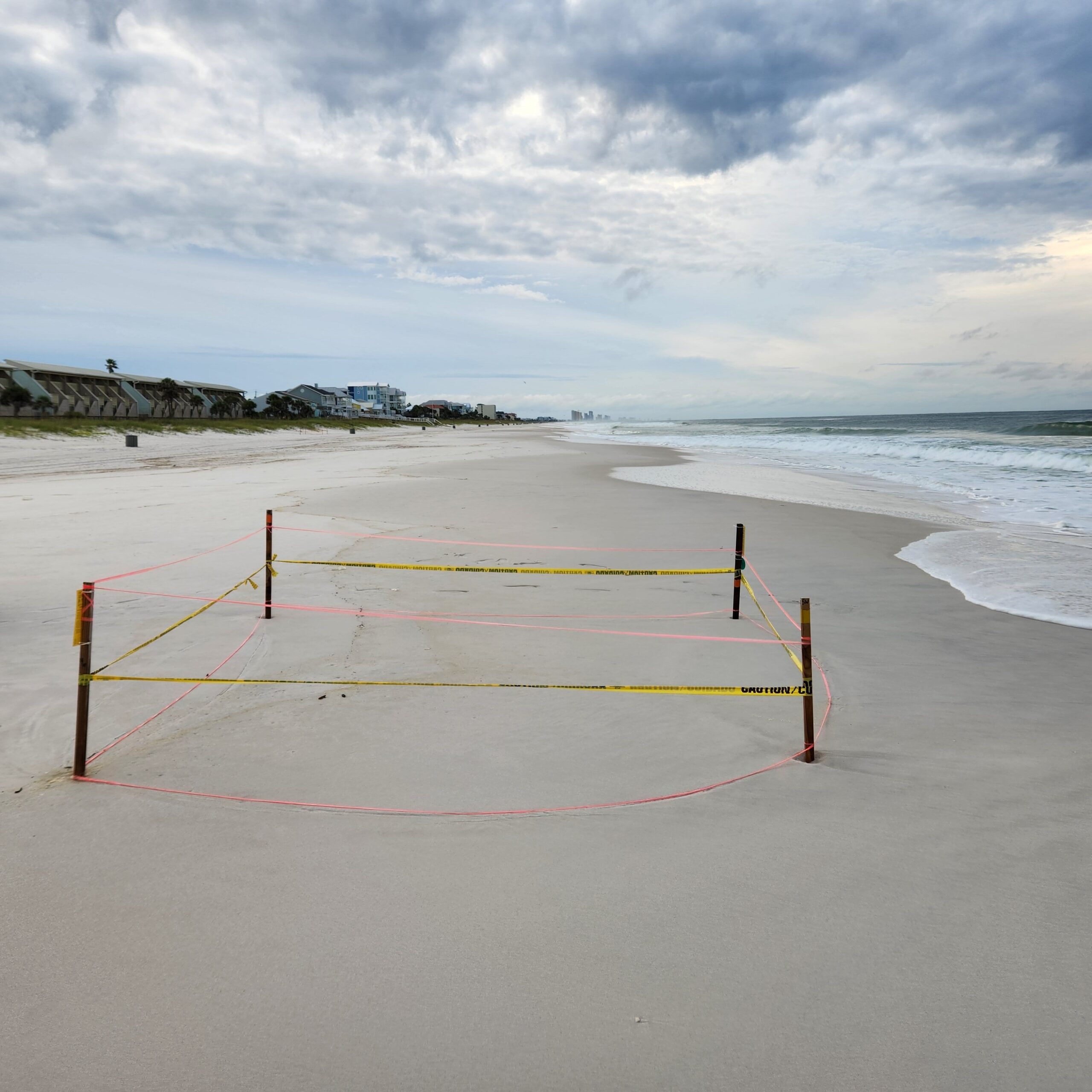
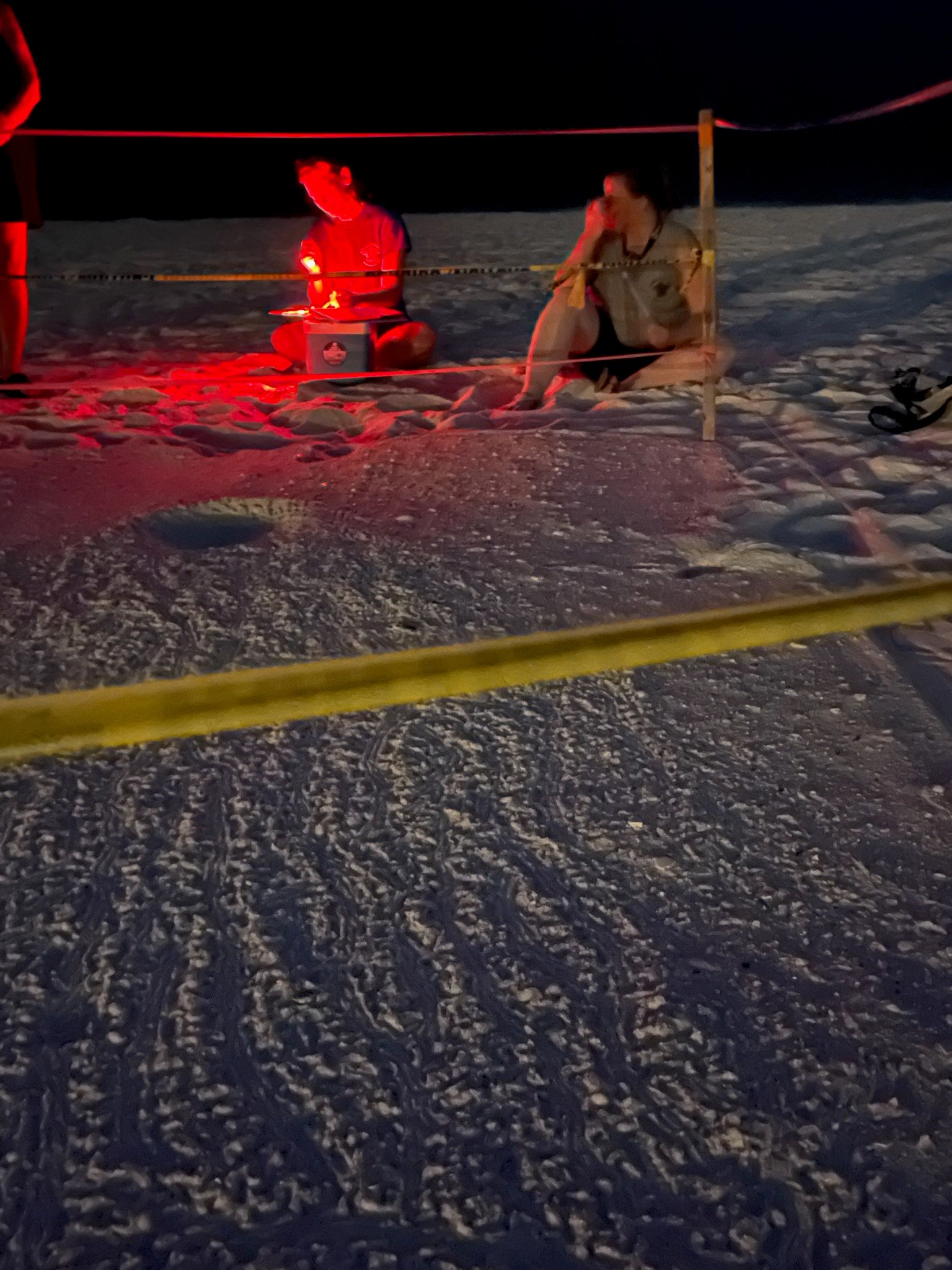
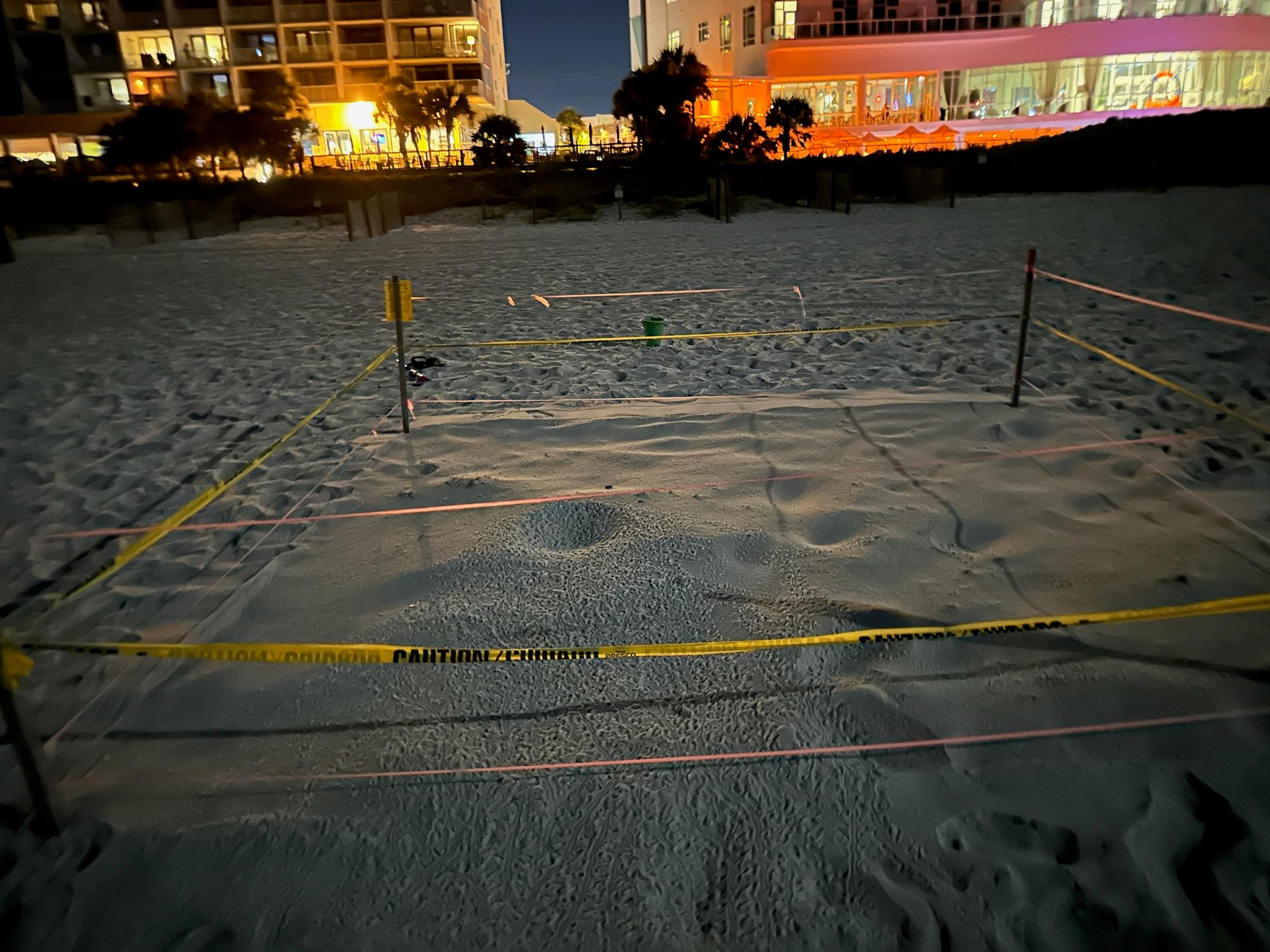
What happens when we find a nest? We follow FWC guidelines and our volunteers mark the area off with stakes and survey/caution tape. A green tag with the nest number (numbered serially as they are found) is added and it stays protected for the next two months while the eggs incubate until it hatches, usually at night. Our volunteers follow FWC guidelines and check the nests (using red lights as they are less disruptive) at night when it has been about two months. If they find hatching activity, they don’t use any lights and make sure the turtles make it to the water that night.
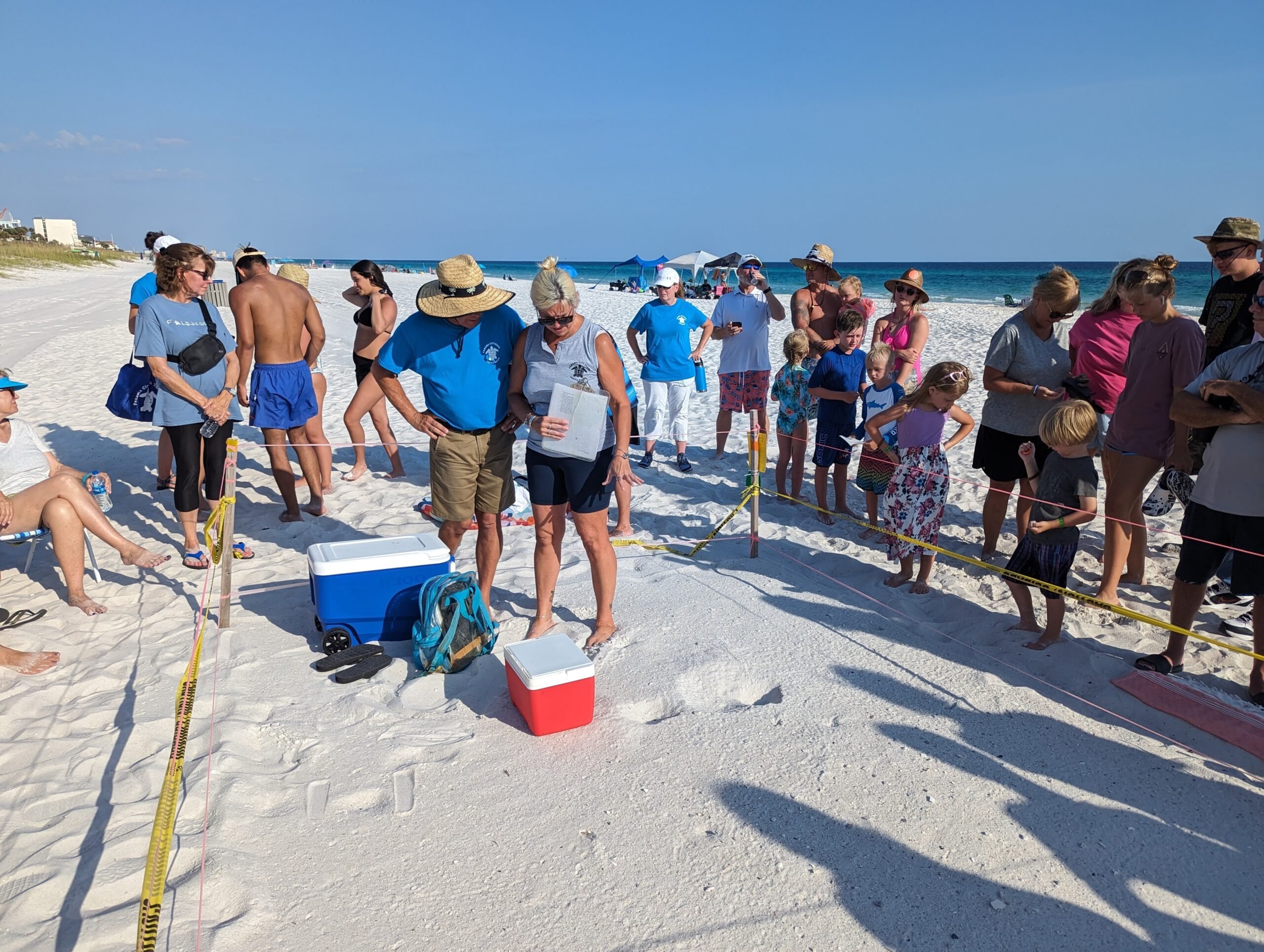
We don’t announce nest locations or predicted hatch dates. What we will announce are any public excavations we will hold. Those are typically late afternoon, announced 1-2 days in advance following a hatch. At an excavation we assess the nest productivity and explain what our program is doing to help protect sea turtles.
Please call the non-emergency PCB Police at 850-233-5000 if you are lucky enough to see a nesting sea turtle or hatchlings on the beach so they can contact our on-call volunteers to respond. Fresh crawl with Volunteers marking the nest
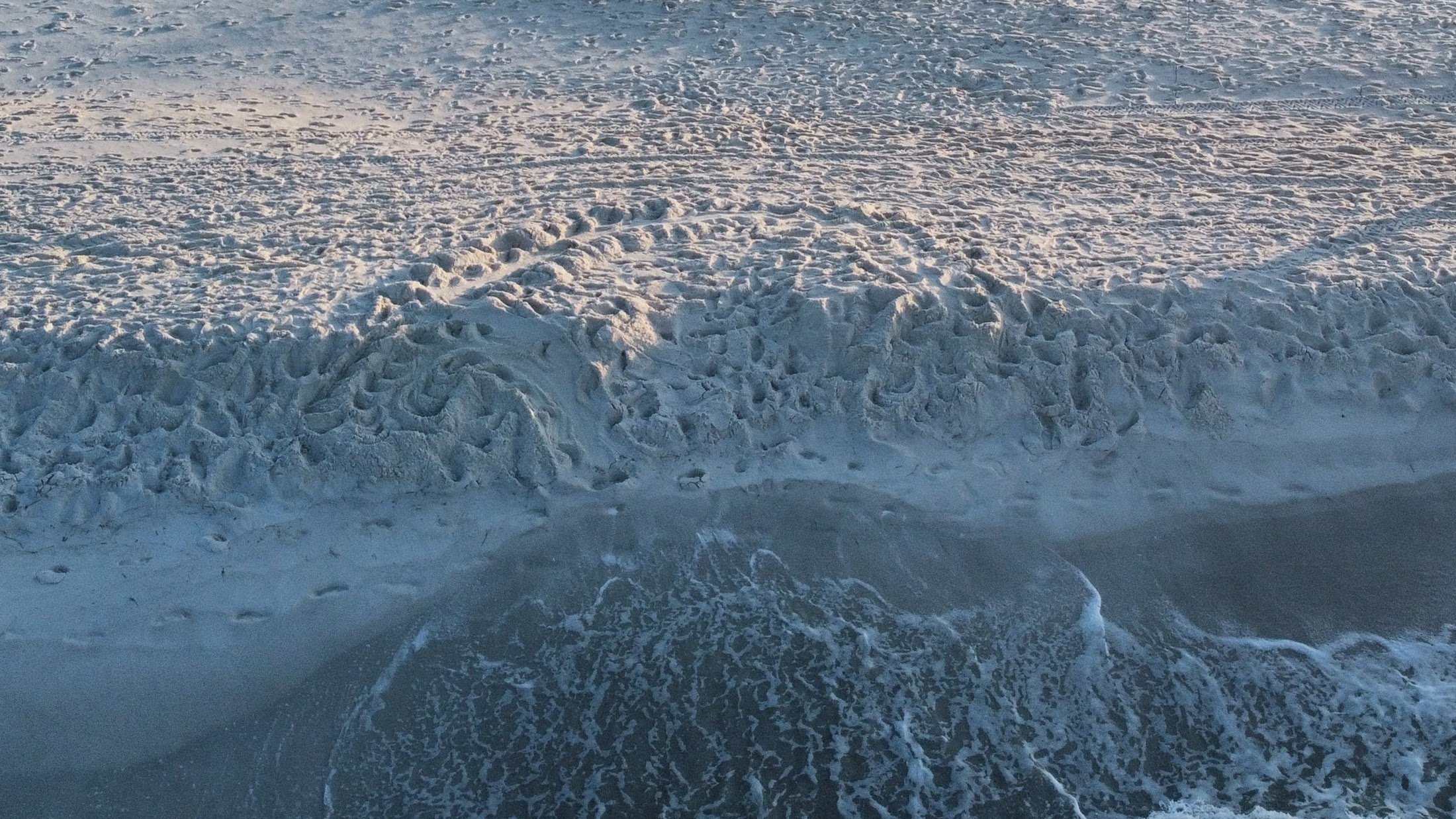
Why yes they can! Weather events like rough surf can cause a slope or escarpment at the water’s edge on our beaches. Over the years, sand dunes form at the dune line often growing sea oats in our area. This week, morning surveyors found examples of sea turtles showing off their climbing skills.
We had a green sea turtle choose a dune as a perfect place for her nest. She climbed the dune and nested within the sea oats. This is common behavior for green sea turtles, the 2nd largest sea turtle species.
We also had a large loggerhead scale an escarpment that was challenging for volunteers to climb easily. Unfortunately after that effort, she false crawled and returned to the water, basically sliding down that escarpment on her final approach to the water.
So yes, sea turtles can climb. But they can not go in reverse. So remember to leave our beaches clean, dark and flat so the only climbing they have to do is up the escarpment or dune!
Please call the non-emergency PCB Police at 850-233-5000 if you are lucky enough to see a nesting sea turtle so they can contact our on-call volunteers to respond. Green sea turtle track with nest in the dunes
Loggerhead sea turtle scaled the escarpment and then false crawled and returned to the water
We are still in our prime nesting season and aren’t quite to hatching season yet (about 2 months after a nest is laid). But one of our most frequently asked questions is, “how can I watch a nest hatch?” Well, mother nature controls sea turtle hatching. We don’t announce nest locations nor predicted hatch dates. During hatching season, our trained volunteers check the nests (using red light if necessary) looking for hatch activity. In the event of finding disoriented hatchlings, they follow FWC protocols and ensure they make it safely to the Gulf that evening. We excavate the nest 3-4 days following and generally announce this on Facebook inviting the public to attend. This is your best chance to hear about our program, the specifics of that particular nest and see the process that documents the success of that nest.
If you encounter a nesting female, a nest hatching or hatchlings on the beach, PLEASE do not use any photography or light. Your eyes will adjust to the darkness and you will be able to observe that wonderful sight from a safe distance. Call PCB Police non-emergency at 850-233-5000 so they can contact our on-call volunteers to respond.
P.S. We are currently at 18 nests along our 18 miles of beach. Seventeen are Loggerhead nests and today surveyors found our first Green nest of the season!